
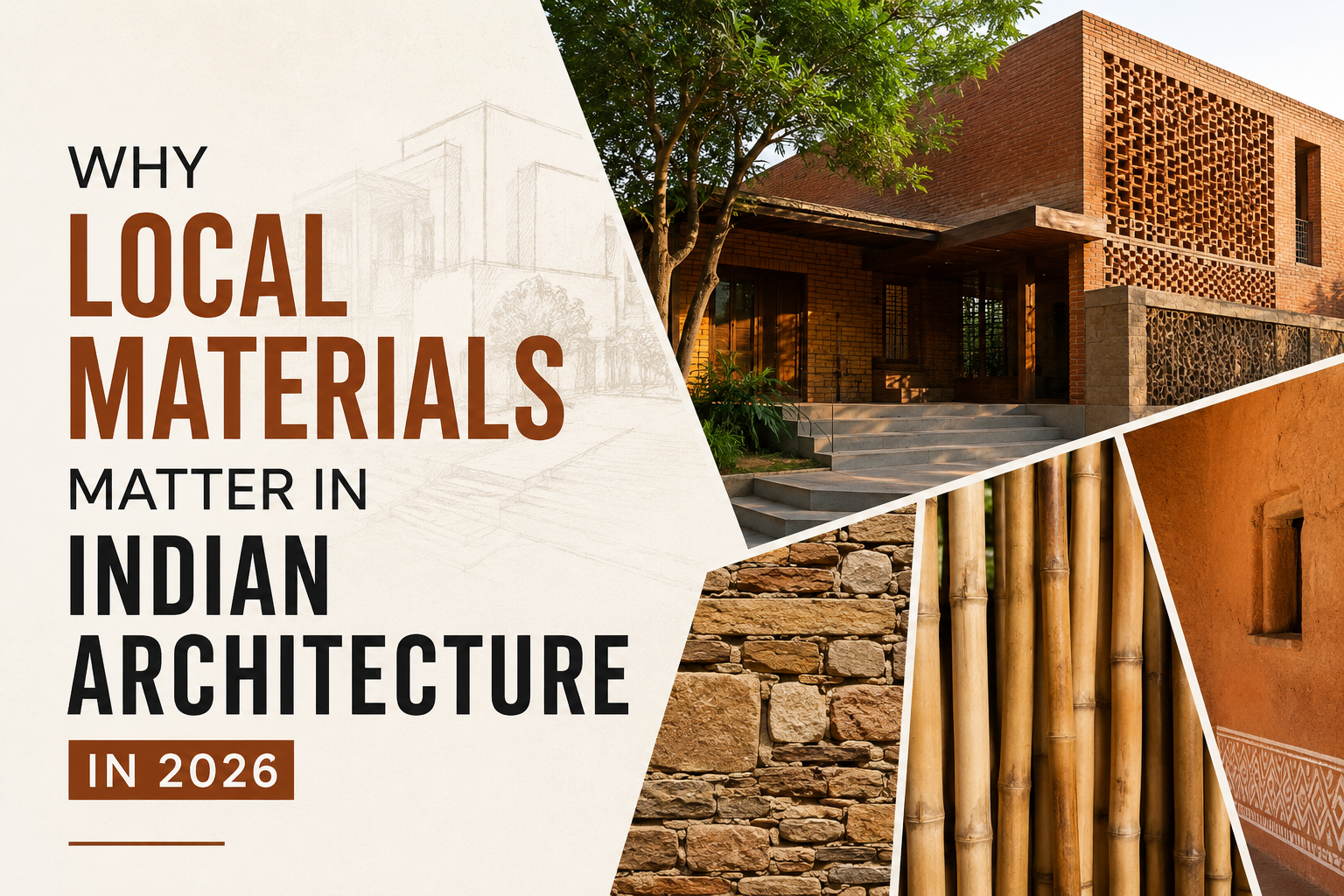
In 2026, Indian architecture is witnessing a quiet but powerful shift. While glass towers and imported finishes once symbolized luxury and progress, architects today are rediscovering the intelligence of local materials — not as a nostalgic choice, but as a smarter, more sustainable design strategy.
Across homes, hospitality spaces, institutional buildings, and urban developments, materials sourced from the region are becoming central to how spaces are imagined and experienced. From Kota stone in Rajasthan to laterite in Kerala, bamboo in the Northeast, and rammed earth walls in Tamil Nadu, Indian architecture is embracing material authenticity with renewed confidence.
This movement is not only about sustainability. It is about identity, climate responsiveness, craftsmanship, cultural continuity, and long-term functionality.
In many ways, 2026 may be remembered as the year Indian architecture stopped copying global aesthetics and started designing more intelligently for its own context.
The Shift Towards Material Conscious Architecture
For decades, modern architecture in India leaned heavily toward imported finishes, high-energy construction systems, and globally influenced visual trends. However, rising environmental concerns, increasing construction costs, and climate-related challenges are changing the conversation.
Today’s architects and designers are asking deeper questions:
- Can buildings perform better using regional materials?
- How can architecture reduce embodied carbon?
- Can luxury feel rooted rather than imported?
- How do materials influence human comfort and emotional experience?
The answers are increasingly pointing toward local materials in Indian architecture.
According to industry estimates, the construction sector contributes nearly 37% of global carbon emissions. A significant portion comes from material extraction, manufacturing, and transportation. Using local building materials in India helps reduce transportation energy, supports regional economies, and often performs better in local climatic conditions.
But beyond sustainability metrics, local materials also create architecture that feels emotionally connected to its surroundings.
Understanding the Value of Local Materials
1. Climate Responsive Architecture Performs Better
India’s climatic diversity demands region-specific solutions. What works in Rajasthan may not work in coastal Kerala or humid Assam.
This is where climate responsive architecture becomes essential.
Traditional materials evolved over centuries because they responded naturally to local weather conditions:
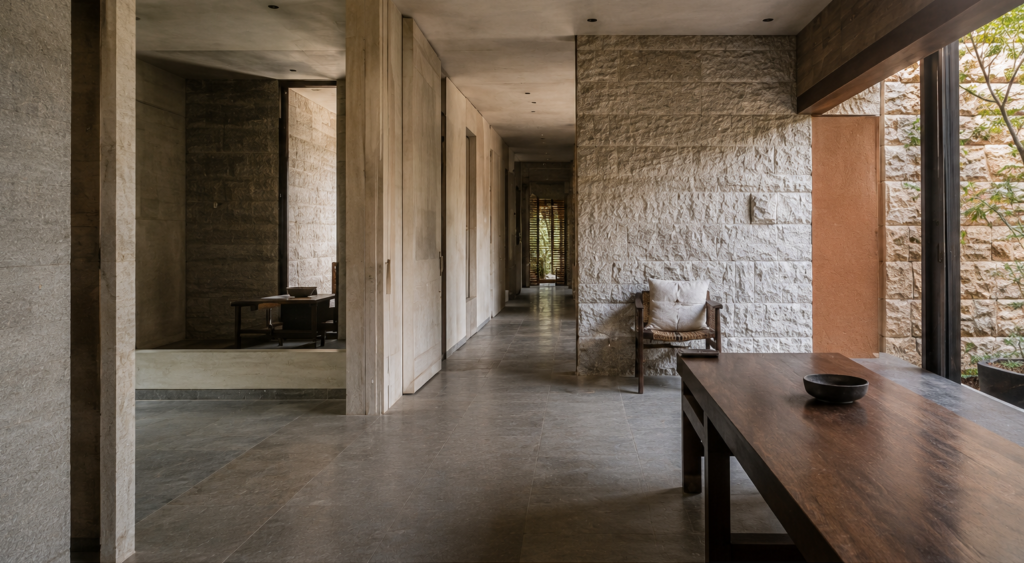
- Thick stone walls reduce heat gain in hot regions
- Lime plaster regulates indoor humidity
- Terracotta roofs improve ventilation
- Bamboo offers flexibility and resilience in high rainfall zones
Unlike generic construction systems, regional materials understand the climate instinctively.
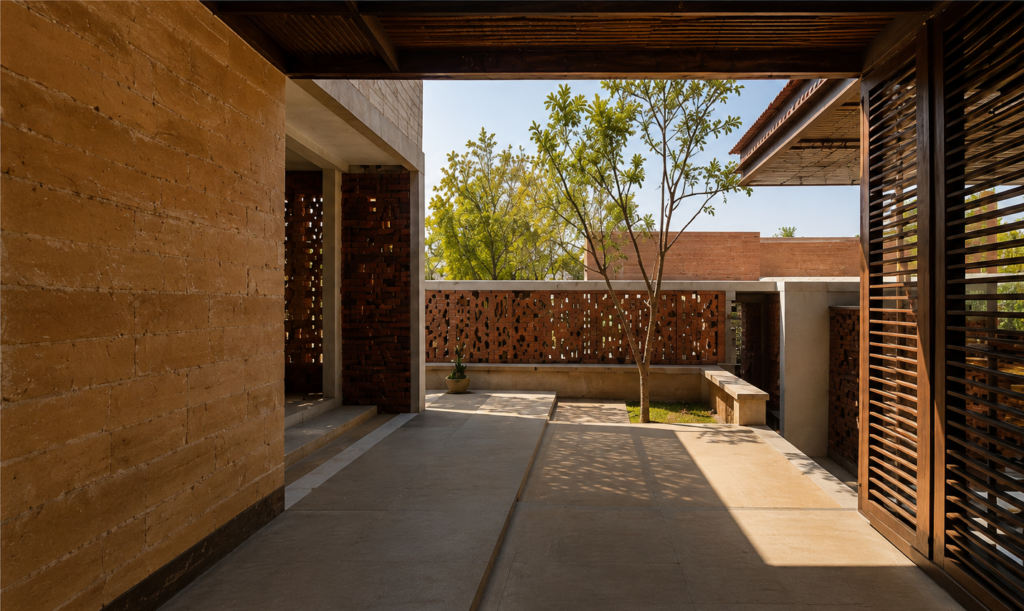
For example, homes designed with exposed brick and shaded courtyards in Ahmedabad often maintain cooler indoor temperatures with reduced dependence on air conditioning. Similarly, mud architecture in Kutch continues to demonstrate remarkable thermal performance even in extreme heat.
In 2026, sustainability is no longer only about adding solar panels. It is about designing buildings that naturally consume less energy from the beginning.
The Return of Vernacular Intelligence
Vernacular Architecture Is Influencing Contemporary Design
The conversation around vernacular architecture India has evolved significantly in recent years. Earlier considered “traditional” or “rural,” vernacular strategies are now inspiring premium hospitality projects, luxury residences, and institutional architecture.
Architects are revisiting:
- Courtyard planning
- Jaali screens
- Lime construction
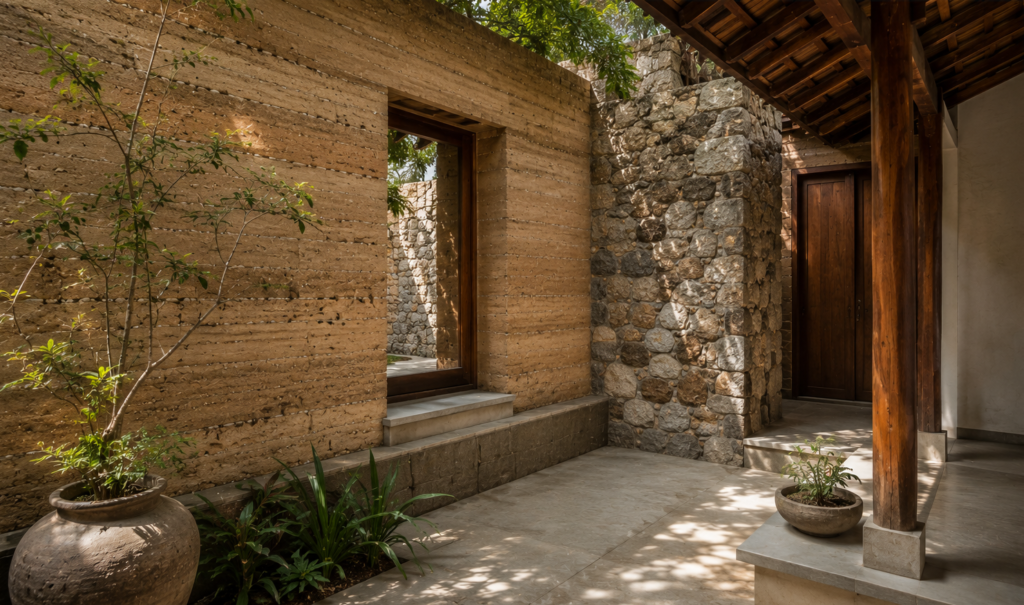
- Stone masonry
- Earth-based materials
- Passive cooling systems
The difference is that these elements are now being integrated into contemporary spatial language.
Projects across India are blending modern minimalism with regional craftsmanship to create spaces that feel both timeless and future-ready.
This approach also improves user experience. Buildings designed with local materials often feel warmer, calmer, and more grounded compared to highly processed synthetic environments.
Materiality directly affects how people emotionally perceive a space.
Why Sustainable Materials Matter More Than Ever
The Growing Demand for Sustainable Materials in India
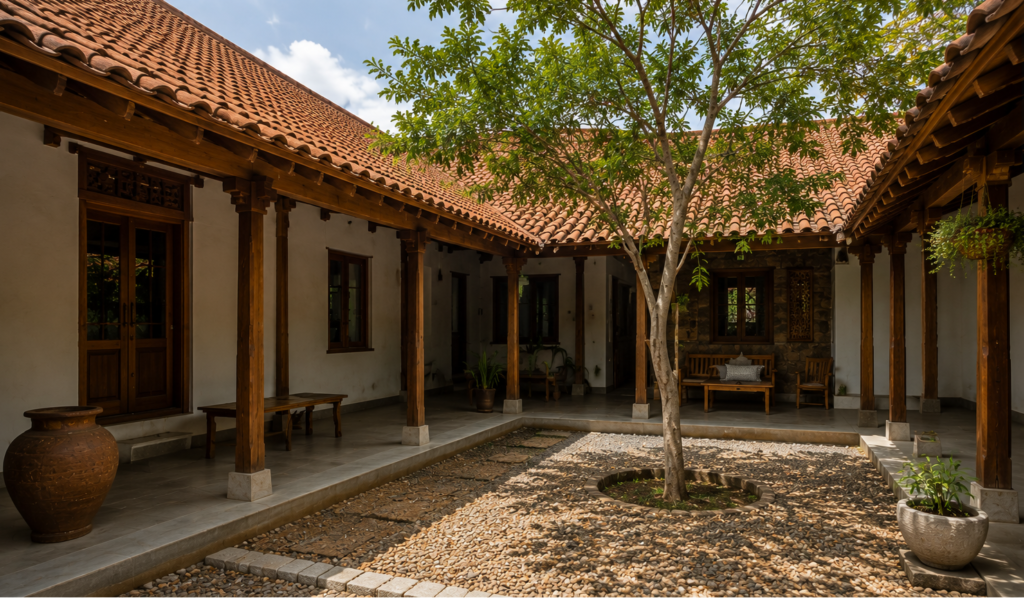
As environmental awareness grows, clients are becoming more conscious about what goes into their buildings.
The demand for sustainable materials India is increasing across:
- Residential projects
- Boutique hotels
- Healthcare architecture
- Educational campuses
- Wellness retreats
- Commercial interiors
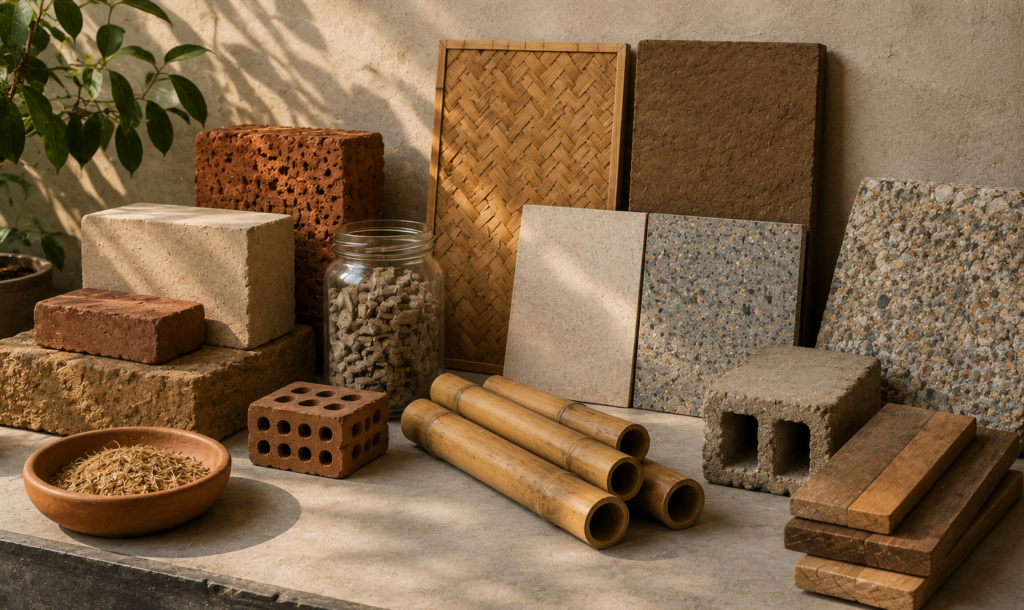
Some widely adopted eco friendly building materials include:
- Bamboo
- Reclaimed wood
- Fly ash bricks
- Rammed earth
- Lime plaster
- Recycled metal
- Natural stone
- Terracotta blocks
These materials reduce environmental impact while adding texture, authenticity, and tactile richness to spaces.
Interestingly, luxury clients are also shifting preferences. In premium homes, understated natural materials are replacing glossy imported finishes. The idea of luxury is becoming quieter, more sensory, and deeply connected to craftsmanship.
Regional Materials Create Stronger Design Identity
Architecture Feels More Authentic When It Belongs to Its Place
One of the biggest criticisms of modern urban development is that cities are beginning to look identical.
Glass façades, artificial finishes, and copy-paste planning have diluted regional architectural identity.
Using regional materials in architecture helps restore contextual relevance.
A resort in Jaisalmer should not feel like a building in Singapore. A coastal villa in Goa should reflect its climate and cultural texture. Materials help create this distinction.
Local stone, handcrafted tiles, regional wood species, and artisanal finishes give projects a narrative that imported products cannot replicate.
For architects, materials become storytelling tools.
For users, they create emotional memory.
The Economic and Social Impact of Local Sourcing
The conversation around local materials is not only environmental — it is also socio-economic.
Sourcing locally supports:
- Regional artisans
- Skilled craftspeople
- Small-scale industries
- Traditional construction knowledge
- Local supply chains
Many Indian crafts are disappearing because industrialized construction replaced handmade processes. By reintroducing local craftsmanship into architecture, designers are helping preserve cultural knowledge systems.
In states like Rajasthan, Gujarat, and Kerala, architects are actively collaborating with local artisans to reinterpret traditional techniques in contemporary ways.
This collaboration is becoming a defining characteristic of thoughtful Indian architecture in 2026.
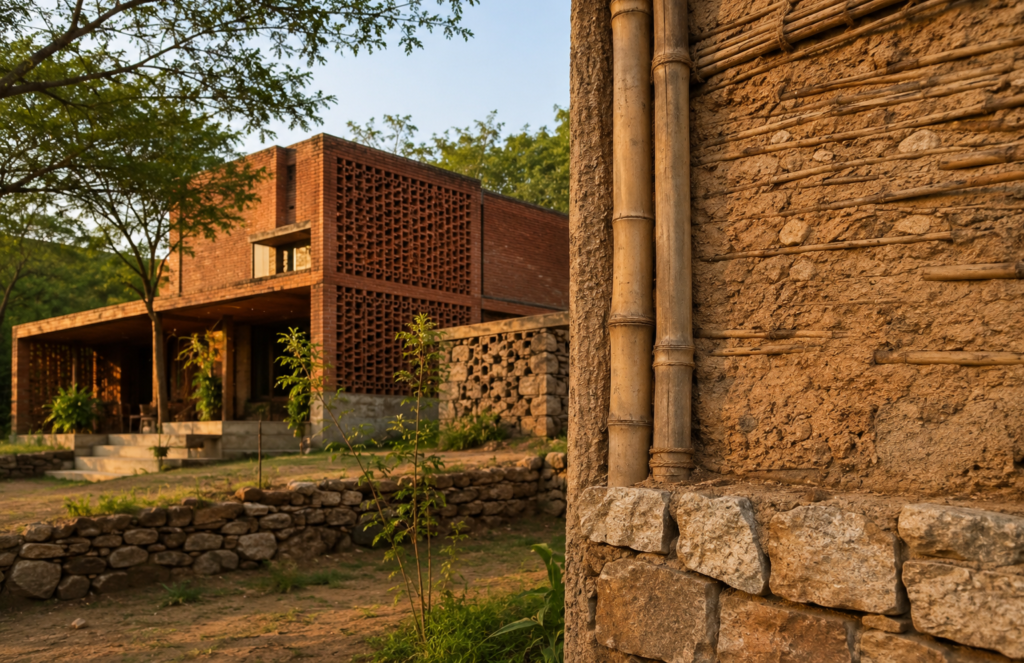
Expert Insight: Material Psychology in Architecture
Materials influence more than aesthetics. They shape human psychology and spatial experience.
Natural materials often create environments that feel calmer and more welcoming because humans instinctively respond to tactile, imperfect, and organic surfaces.
Research in environmental psychology suggests that spaces using natural textures can reduce stress levels and improve emotional comfort.
For example:
- Wood introduces warmth
- Stone creates grounding
- Earth textures evoke familiarity
- Natural light paired with raw materials enhances wellbeing
This is especially important in healthcare architecture, hospitality spaces, and residential interiors where emotional experience directly impacts user satisfaction.
Modern architecture is increasingly moving from “visual design” to “sensory design.”
And materials are at the center of that transformation.
Challenges in Using Local Materials
Despite the advantages, architects still face challenges when working with local materials.
These include:
Availability and Scalability: Certain traditional materials are difficult to source consistently for large-scale projects.
Skill Gaps: Modern contractors may lack expertise in lime work, earth construction, or traditional joinery systems.
Perception Issues: Some clients still associate local materials with “unfinished” or “non-premium” aesthetics.
Regulatory Limitations: Urban construction policies sometimes prioritize standardized systems over regional experimentation.
However, innovative architects and material researchers are bridging these gaps through hybrid construction systems and modern fabrication technologies.
Future Trends: What Will Shape Material Innovation in 2026 and Beyond?
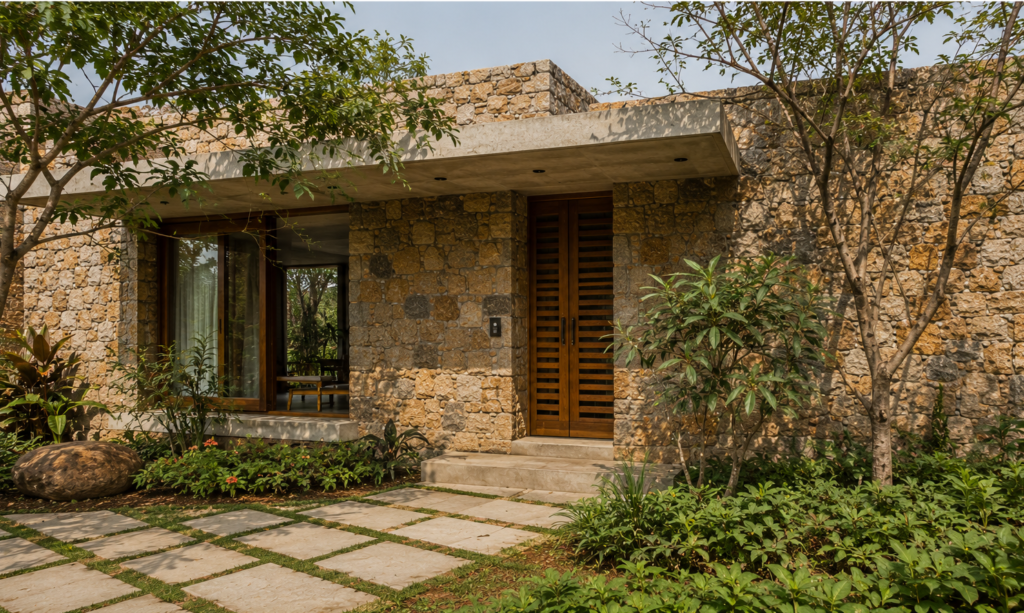
The future of traditional Indian architecture is not about going backward. It is about combining indigenous wisdom with modern technology.
Here are the key trends shaping the future:
1. Hybrid Sustainable Materials: Combining traditional materials with engineered systems for better durability and performance.
2. Carbon-Conscious Architecture: Embodied carbon calculations will increasingly influence material selection.
3. AI and Material Mapping: Technology is helping architects identify region-specific materials based on climate data and performance analysis.
4. Circular Design Practices: Recycled and reusable materials will become mainstream in architecture and interiors.
5. Hyper-Local Design Language: Projects will increasingly celebrate local identity instead of following global visual sameness.
The next decade of Indian architecture will likely belong to buildings that are intelligent, rooted, and environmentally responsible.
Conclusion
The renewed focus on local materials in Indian architecture is more than a design trend. It reflects a deeper cultural and environmental awakening within the industry.
As India faces rapid urbanization, climate pressures, and evolving lifestyle expectations, architecture must become more responsive — not only technologically, but contextually.
Local materials offer a powerful solution because they combine sustainability, functionality, craftsmanship, climate intelligence, and emotional authenticity.
The most meaningful architecture of 2026 is not trying to look global.
It is learning how to belong.
For architects, designers, and developers, the future may not lie in importing more — but in rediscovering what already exists around us.
Design Unfiltered
Shaping the Future of Indian Architecture: At Design Unfiltered, we explore architecture that responds intelligently to people, place, materials, and the future of design culture in India.
Join us for exclusive insights on sustainable architecture, hospitality design, luxury residences, and material innovation.
5. FAQs
Why are local materials important in Indian architecture?
Local materials improve climate responsiveness, reduce transportation emissions, support regional economies, and create contextually relevant architecture.
What are some sustainable building materials used in India?
Common sustainable materials include bamboo, rammed earth, terracotta, fly ash bricks, lime plaster, reclaimed wood, and natural stone.
How does vernacular architecture influence modern Indian design?
Modern architects are adapting traditional passive cooling systems, courtyard planning, local materials, and artisanal craftsmanship into contemporary architecture.
Are eco friendly building materials expensive?
Not always. While some handcrafted materials may cost more initially, they often reduce long-term energy consumption and maintenance costs.
What is climate responsive architecture?
Climate responsive architecture refers to buildings designed according to local weather conditions to improve thermal comfort and energy efficiency naturally.


[…] ink, and binding of the book. They determine how a building looks, feels, performs, and endures. Local Materials Matter more than ever in this context not just for cost efficiency, but for cultural resonance and […]
[…] just structural or aesthetic choices — they are sensory and cultural ones. A building that uses local materials in Indian architecture speaks a language the body already […]
[…] reading: Why Local Materials Matter in Indian Architecture in 2026 — an in-depth look at how regional materials are shaping sustainable design practice across […]