Punjab not only lost land during the Partition of India, but it also lost its historic and cultural capital, Lahore. For centuries, Lahore had been the political, intellectual, and cultural heart of the region — a city of poets, monuments, and markets that embodied the spirit of Punjab. With Lahore becoming part of Pakistan, the Indian side of Punjab was left without an administrative centre, without a city that could carry the weight of governance and identity. This moment of profound loss led to one of India’s most significant architectural and urban planning experiments — the creation of Chandigarh.
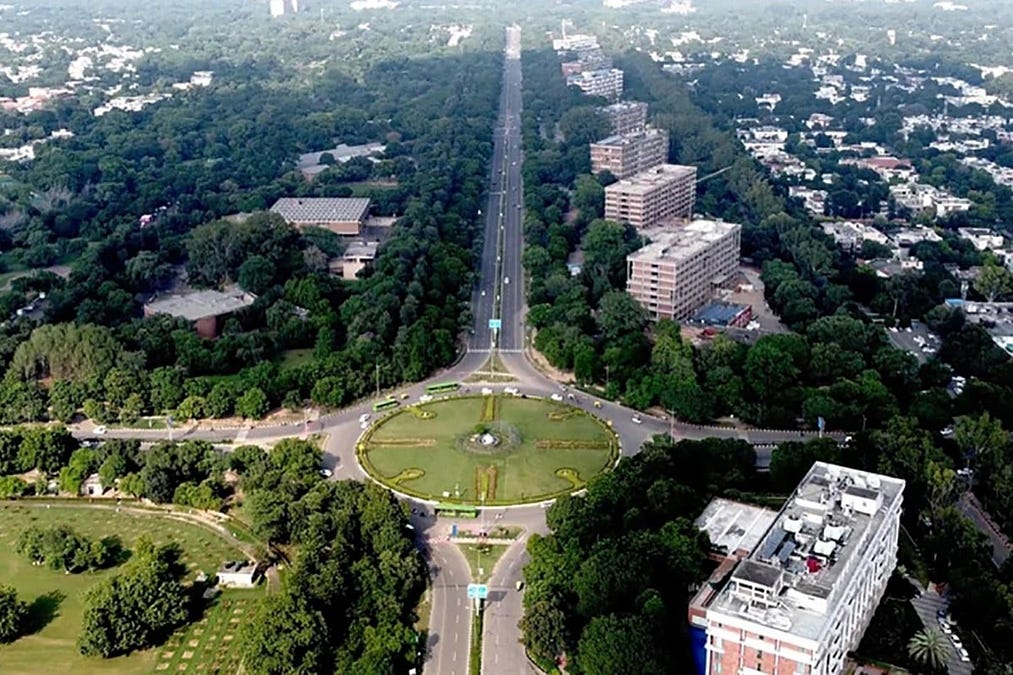
Chandigarh was envisioned as India’s first modern planned city, representing the aspirations and ambitions of a newly independent nation eager to define itself on its own terms. It was to be a city that looked forward, not backward — a clean break from the colonial past and a bold statement of what India could become. But the city was not built on empty land. Nearly 50 villages once existed on this site, home to farming communities with deep roots in the soil. Many of them disappeared entirely during the development process, their names surviving only in records, while others were gradually absorbed into the expanding urban structure, their identities slowly dissolved into the new city’s grid.
The master plan was designed by the renowned Swiss-French modernist architect Le Corbusier, who was brought in alongside his cousin Pierre Jeanneret and the British architects Jane Drew and Maxwell Fry. Together, they imagined Chandigarh not merely as a collection of buildings and roads, but as a living, breathing urban organism — a city conceived in the image of a human body, where each part had a specific function within a larger, interdependent system.
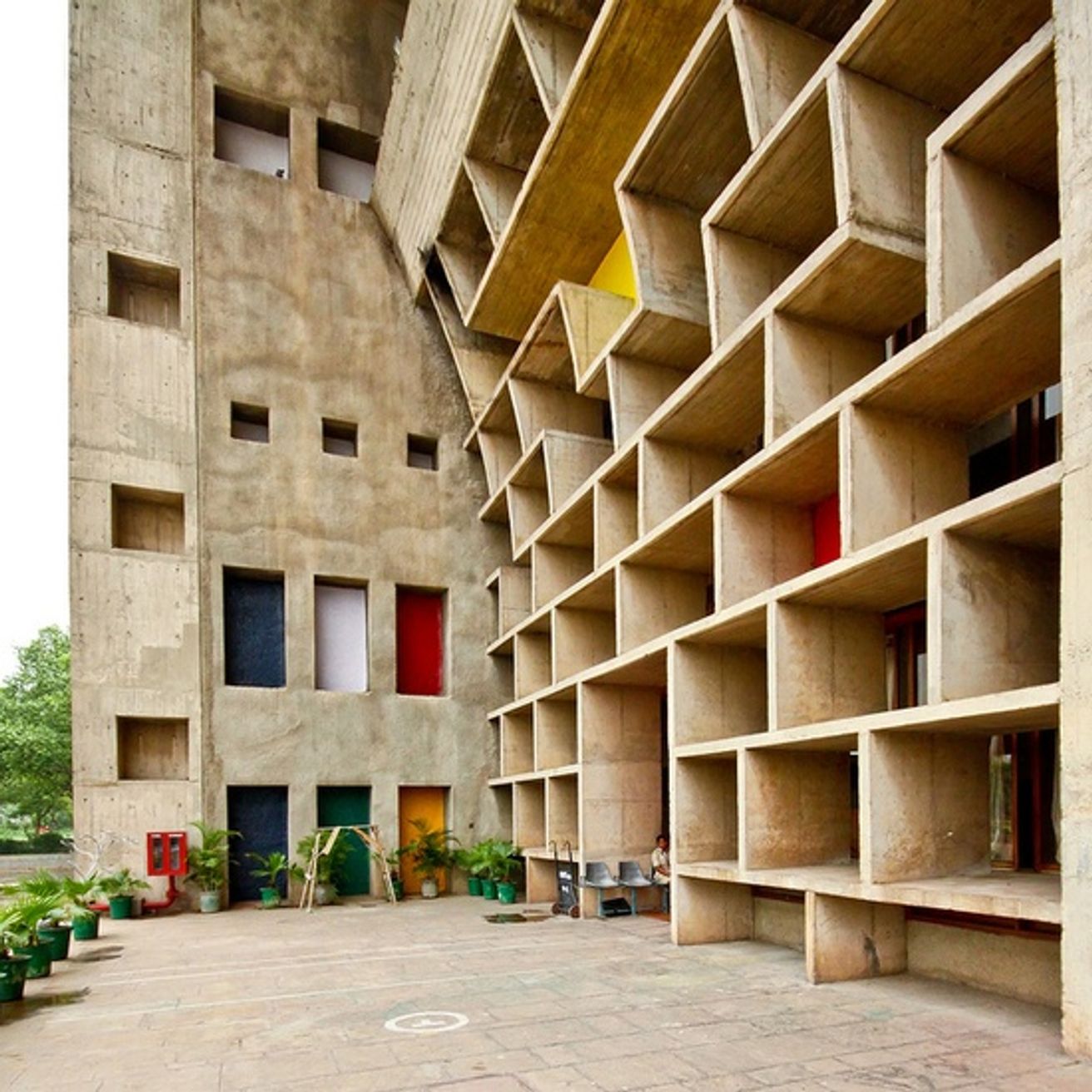
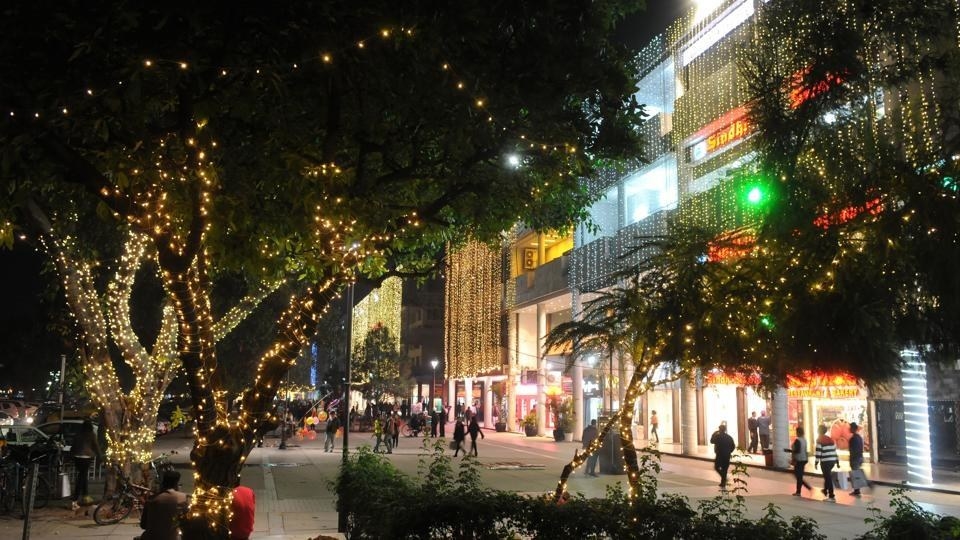
In this concept, the Capitol Complex formed the Head of the city, housing the major government institutions — the Legislative Assembly, the High Court, and the Secretariat — symbolising power, governance, and the authority of the new Indian state. The Sector 17 Plaza became the Heart, designed as the city’s central commercial and social hub, a place where civic life would pulse and people would gather. The surrounding residential sectors formed the body, carefully planned as self-sufficient neighbourhoods where people could live, work, shop, and carry out the full range of everyday activities without needing to travel far.
Chandigarh’s architecture and planning introduced a clear grid of sectors, wide tree-lined roads, expansive green belts, and a carefully considered hierarchy of circulation routes that separated pedestrians from cyclists and motor vehicles. Monumental concrete buildings, open public plazas, and climate-responsive design elements — such as deep brise-soleils and shaded walkways — reflected the ideals of modernist architecture thoughtfully adapted to the Indian climate and context. The city was also designed at a human scale, with parks, open spaces, and community facilities woven into each sector.
In essence, Chandigarh was more than just a new capital city built to replace what had been lost. It was a powerful architectural vision — a demonstration of how thoughtful planning, bold design, and carefully considered urban form could shape the identity, the confidence, and the future of a newly independent India stepping into the modern world.
Tags