The Courtyard: India’s Oldest Smart Home Feature
Courtyards have always been the quiet superpower of Indian homes. Long before air conditioning, before glass facades and mechanical ventilation, Indian builders had already solved the problem of heat, light, and community with a simple open square at the heart of the house.
The idea runs deeper than architecture. In Vastu Shastra, the central open space is called the Brahmasthan which is the energetic heart of the home. Leave it open, the ancient texts advised, and the house will breathe. Block it, and something essential is lost. Centuries of lived experience proved them right.
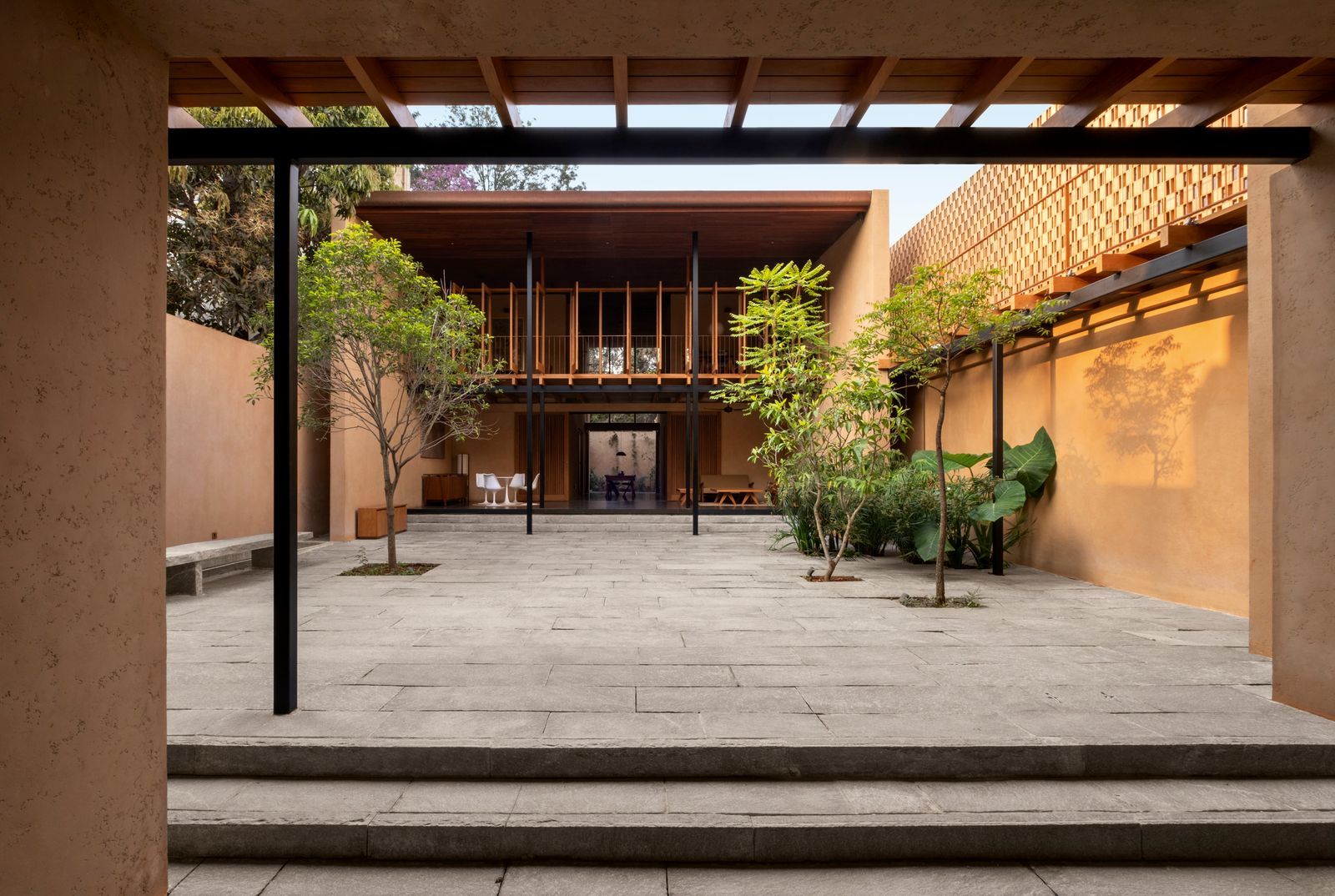
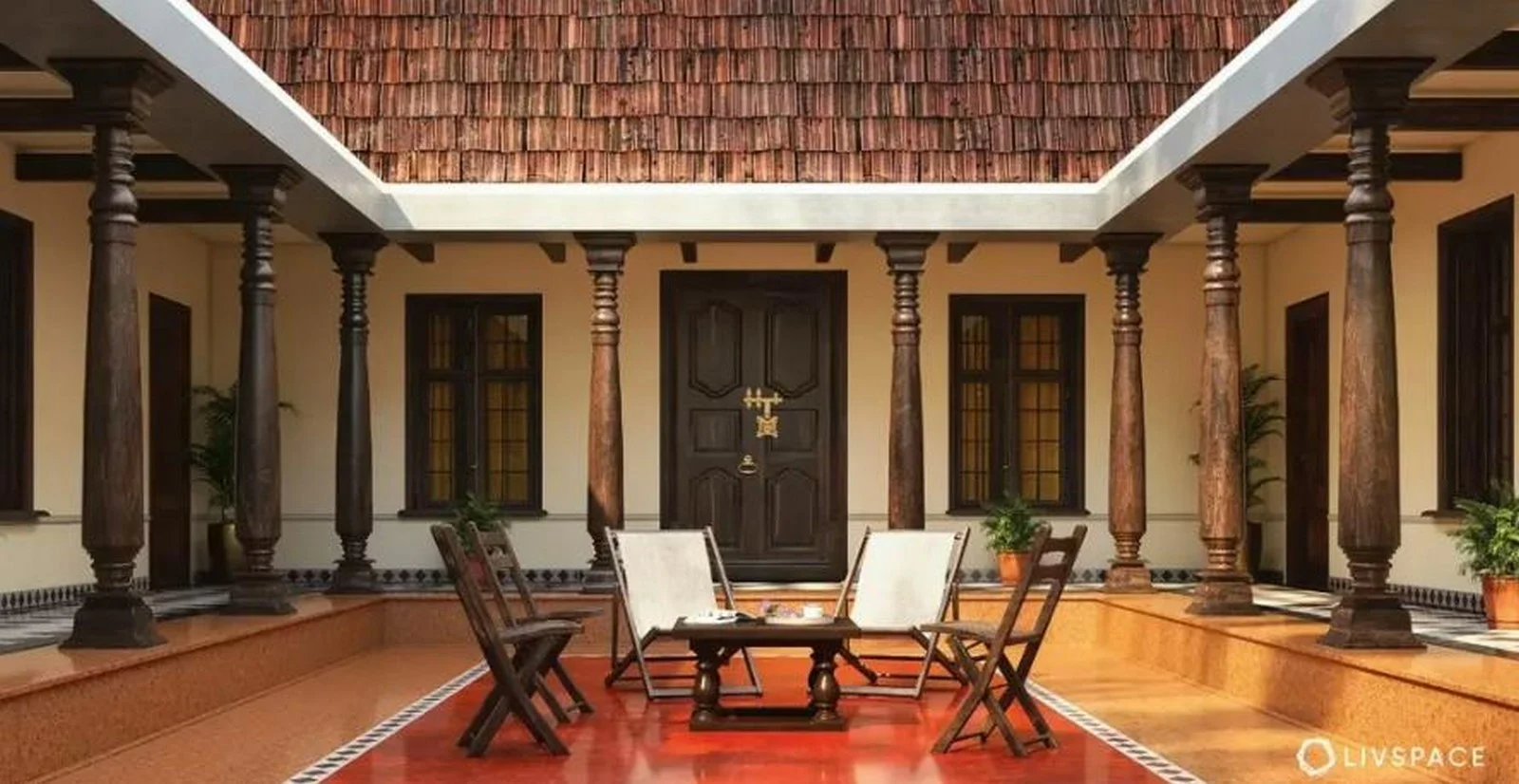
Look at any great tradition of Indian domestic architecture and you’ll find a courtyard at its core. The grand havelis of Rajasthan wrapped rooms around open courtyards to create shade and capture desert breezes. Kerala’s nalukettu homes oriented their four wings around a central courtyard that channelled monsoon light deep into the interior. In Tamil Nadu, the madam courtyard doubled as a gathering space, a drying yard, and a stage for festivals. Different regions, different climates but the same elegant solution.
And it works with quiet, measurable efficiency. A well-designed courtyard can reduce indoor temperatures by 5 to 7 degrees Celsius through natural convection where warm air rises and escapes upward, drawing cooler air in from the surroundings. Rooms arranged around a courtyard stay naturally lit for 8 to 10 hours a day, reducing dependence on artificial light. Add a small water feature or a lily pond at the centre, and you introduce evaporative cooling ,exactly the same principle Indian palaces used to keep their interiors comfortable through the harshest summers.
Beyond the science, the courtyard was the living room before living rooms existed. Families gathered here to dry pickles in winter sun, to weave, to drink evening chai, to sleep under stars in May, to mark weddings and harvests and the slow rituals of daily life. It was the space that held everything together — open enough to feel free, enclosed enough to feel safe.
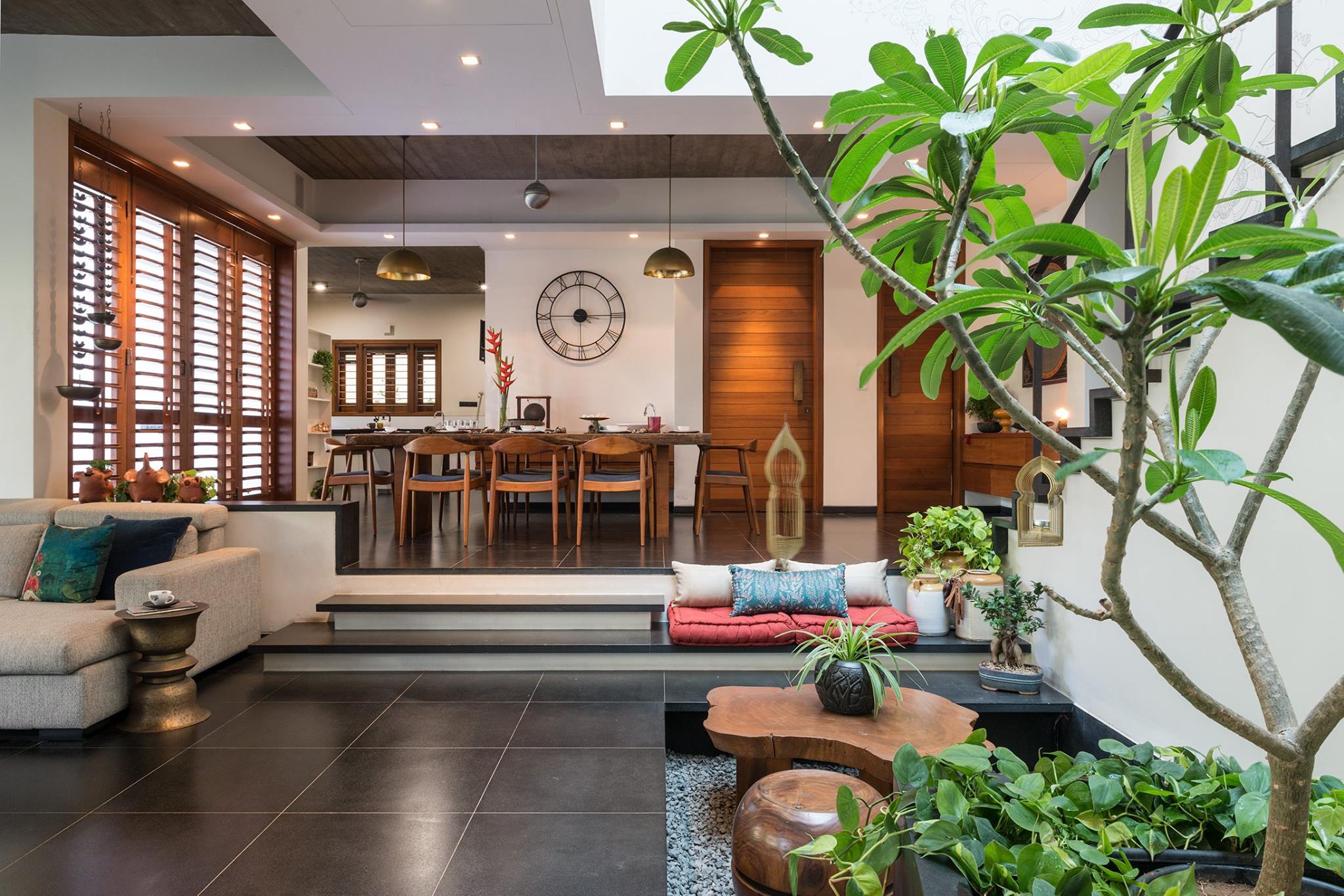
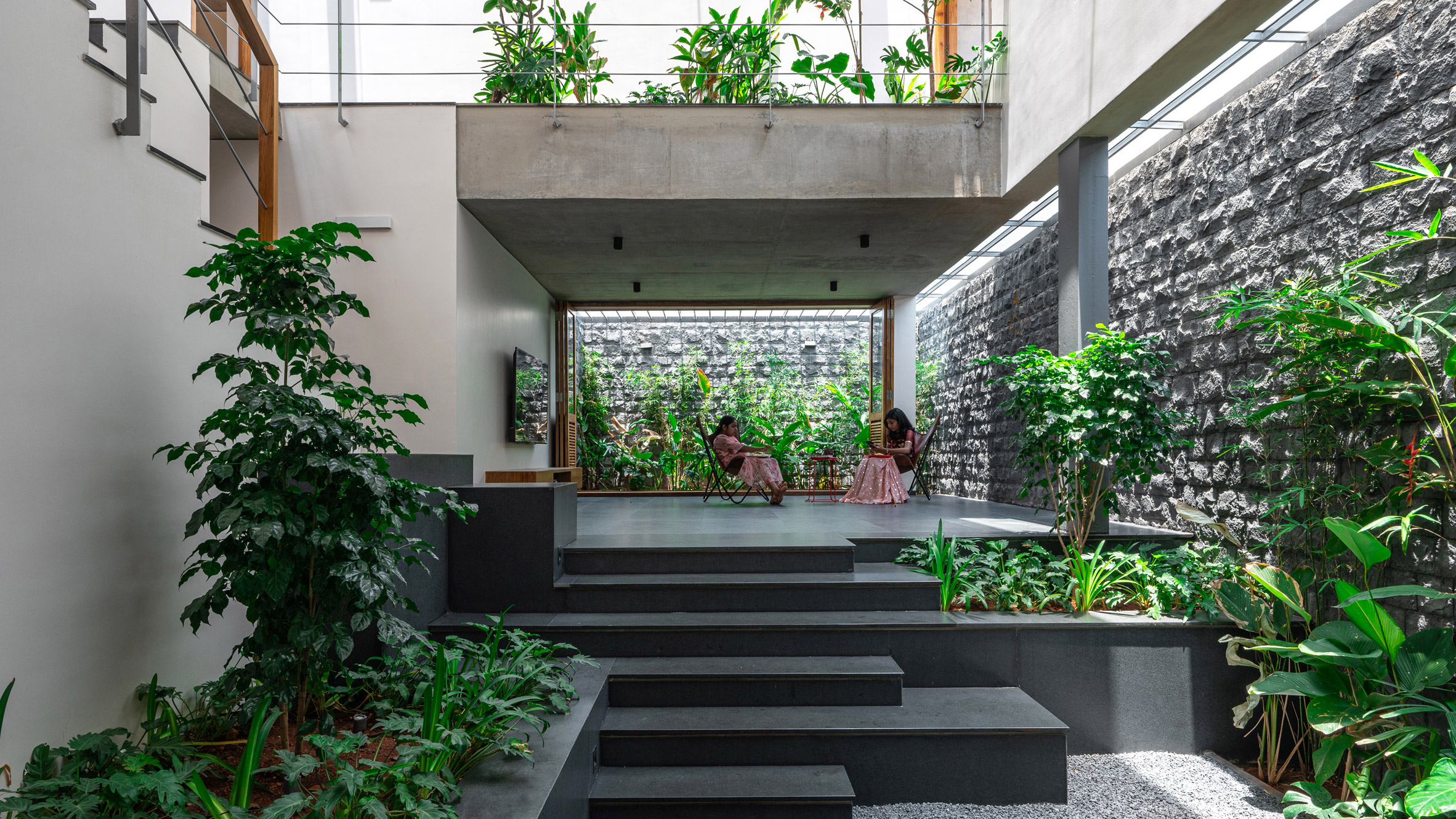
Today, as homes grow smaller and cities louder, the courtyard is finding its way back. Architects are reimagining it for apartments and urban plots — as light wells, sky gardens, and open-to-sky rooms. The proportions have changed, but the logic hasn’t.
A courtyard gives a home something no HVAC system can fully replicate: a connection to sky, season, and the rhythm of the day. It is not a luxury. It is, and always was, a necessity dressed beautifully in stone and open air.