Frank Gehry: A Timeless Tale of Architecture
As a child, he would play with scraps of cardboard, building odd little shapes without much thought about how they should ideally look. This went on and on for nine decades until it was time for the boy to turn his playful curiosity into meaningful architecture.
The Guggenheim Bilbao, the Walt Disney Concert Hall and the Louis Vuitton Foundation in Paris are just the fragments of his architectural imagination. Well, no special treats for guessing, we are indeed discussing the great Frank Gehry, the infamous Canadian-American architect, in this post.
What’s surprising is that before fame, Gehry faced years of rejection. His ideas were called strange, messy, even wrong. But he didn’t shrink himself to fit expectations. He trusted the part of him that loved experimenting, bending rules, and creating things that felt alive.
December 2025, when he left the world, leaving us with those iconic buildings, he did also leave a legacy behind – a design language hard-to-be-recreated anytime soon.
And once his designs started blooming, there was no coming back.
They said his passing was the end of an era in global architecture. Let’s understand why they say so when we look at these gems of architecture here:
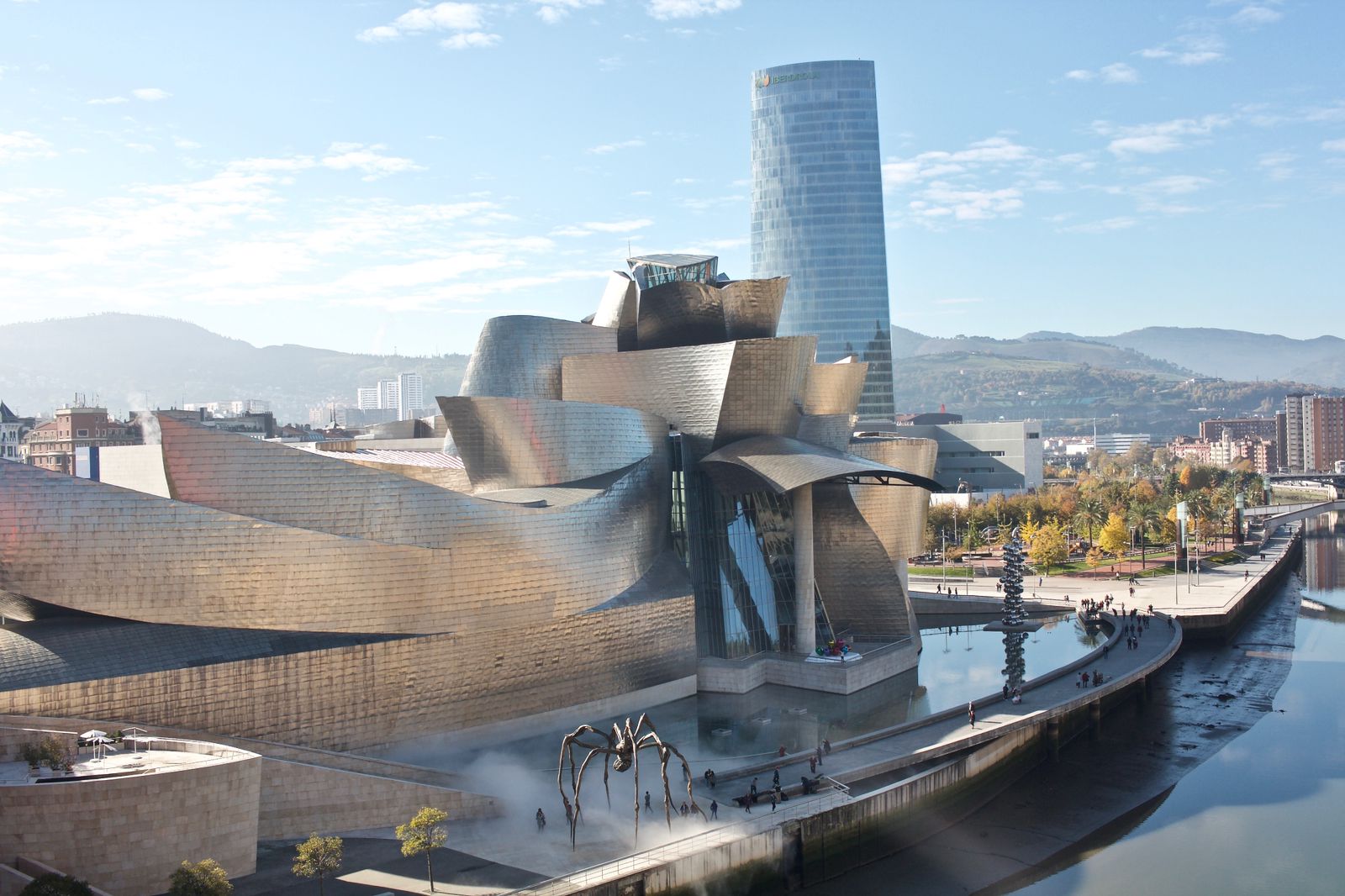
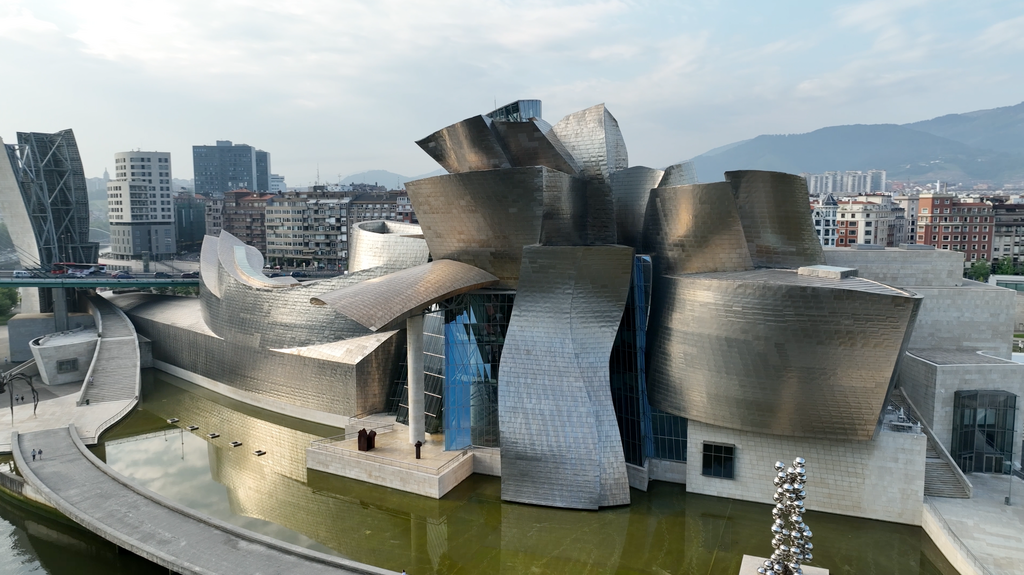
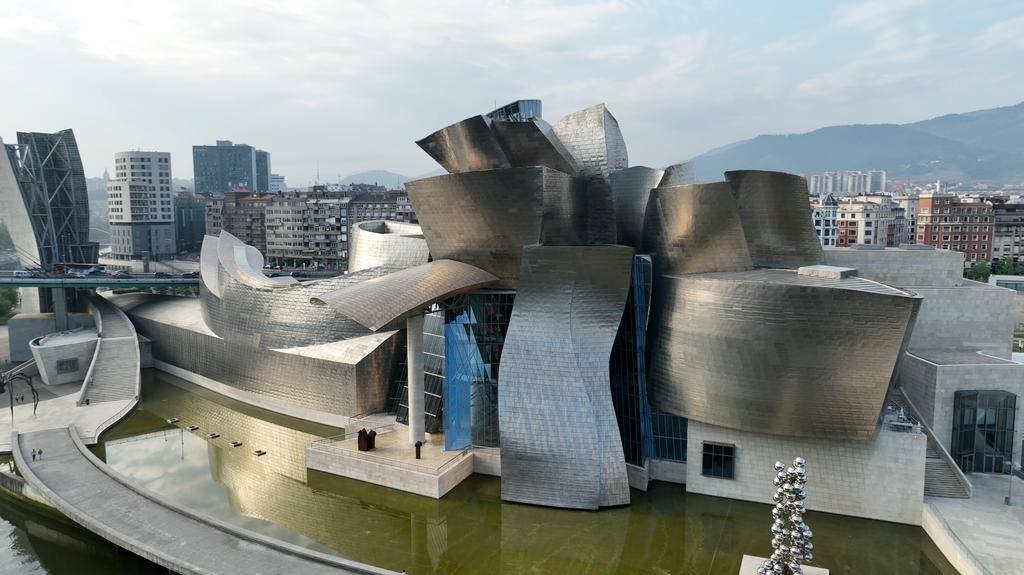
Guggenheim Museum, Bilbao (1997)
Well, not exaggerating, the Guggenheim Bilbao is the building that made the people in Spain stop and stare with awe. Often called one of the most influential buildings of the current times, it transformed Bilbao’s global image so dramatically that it gave out the term “the Bilbao effect”. Frank, for this project, used advanced aviation software to bring its massive, curving forms to life.
Did You Know?
The stone, glass, and 33,000 titanium panels used in the building shimmer differently depending on the weather in the city.
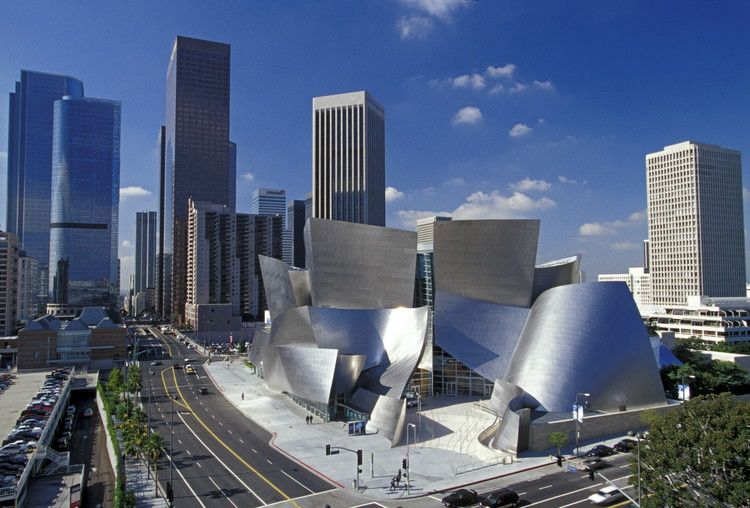
Walt Disney Concert Hall, Los Angeles (2003)
This one took sixteen years to complete and started with a $50 million donation from Walt Disney’s widow. The cost however, reached $274 million upon its completion. But the result was worth it – one of L.A.’s most adored cultural landmarks. With 293,000 square feet of space and a 2,265-seat auditorium, the building is known for its warm acoustics and those iconic stainless-steel curves that define the city’s skyline. Treat for the eyes, undoubtedly.
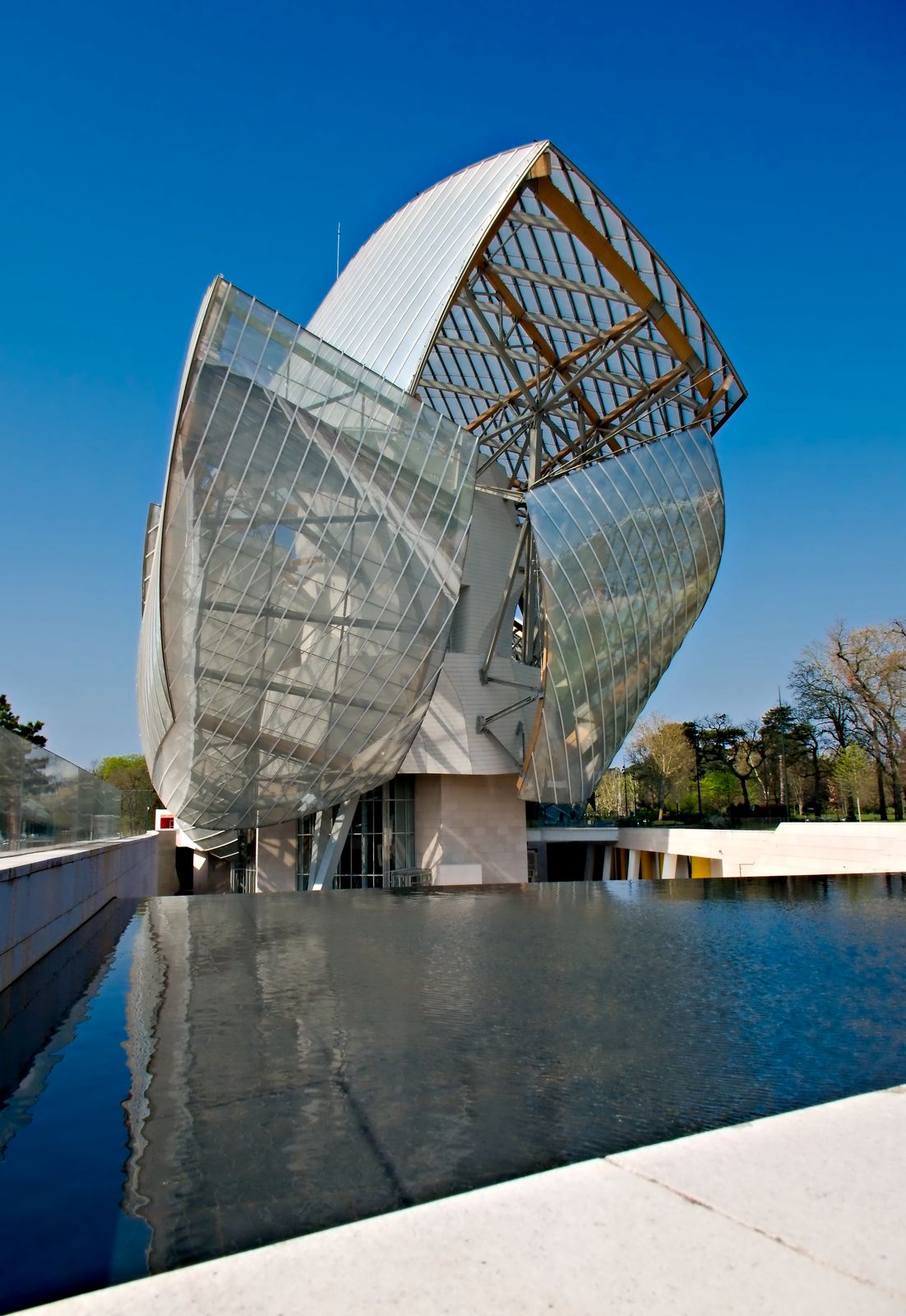
Fondation Louis Vuitton, Paris (2014)
Frank’s this one happened when architecture shook hands with luxury. Set inside the lush Bois de Boulogne, the Fondation Louis Vuitton resembles a ship made of glass sails. Its overlapping panels of steel and glass catch the light beautifully, and a water feature runs underneath, making the whole thing feel light and almost floating. It cost $135 million and now houses Bernard Arnault’s private art collection.
Did You Know?
Many critics know Fondation Louis Vuitton as one of Gehry’s most advanced projects.
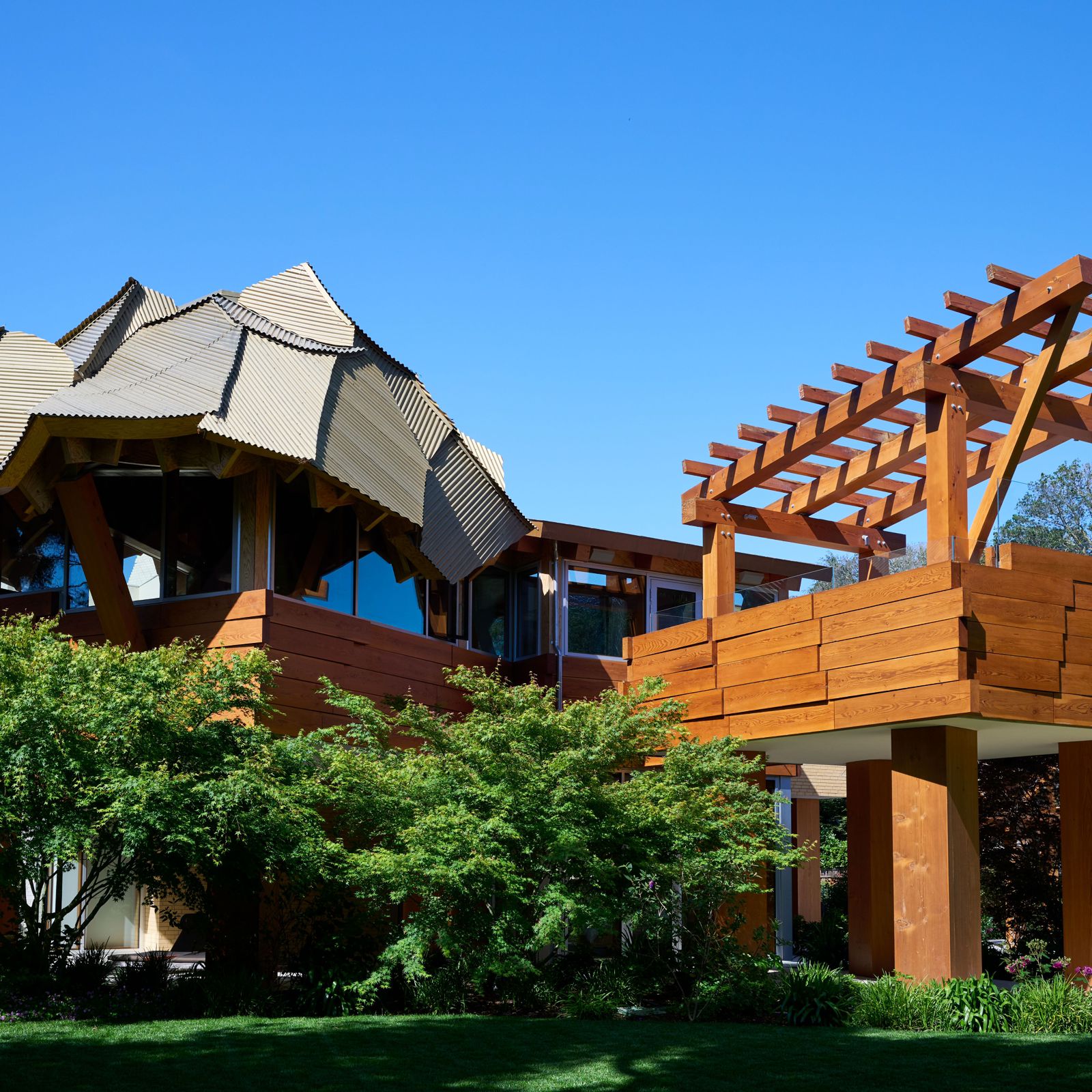
Gehry House, Santa Monica (1978)
For Frank, architecture began “from” his own home in Santa Monica. Instead of tearing down the original 1920s Dutch Colonial bungalow, he decided to build around it. And interestingly, he didn’t use fancy materials; plywood, corrugated metal, and lots of glass were some of the materials he settled for. And what came about was a house with sharp angles and layered forms that surprised everyone. The property served as his family home for good forty years and eventually became a quirky little tourist stop thereafter. But the nostalgia never stopped!
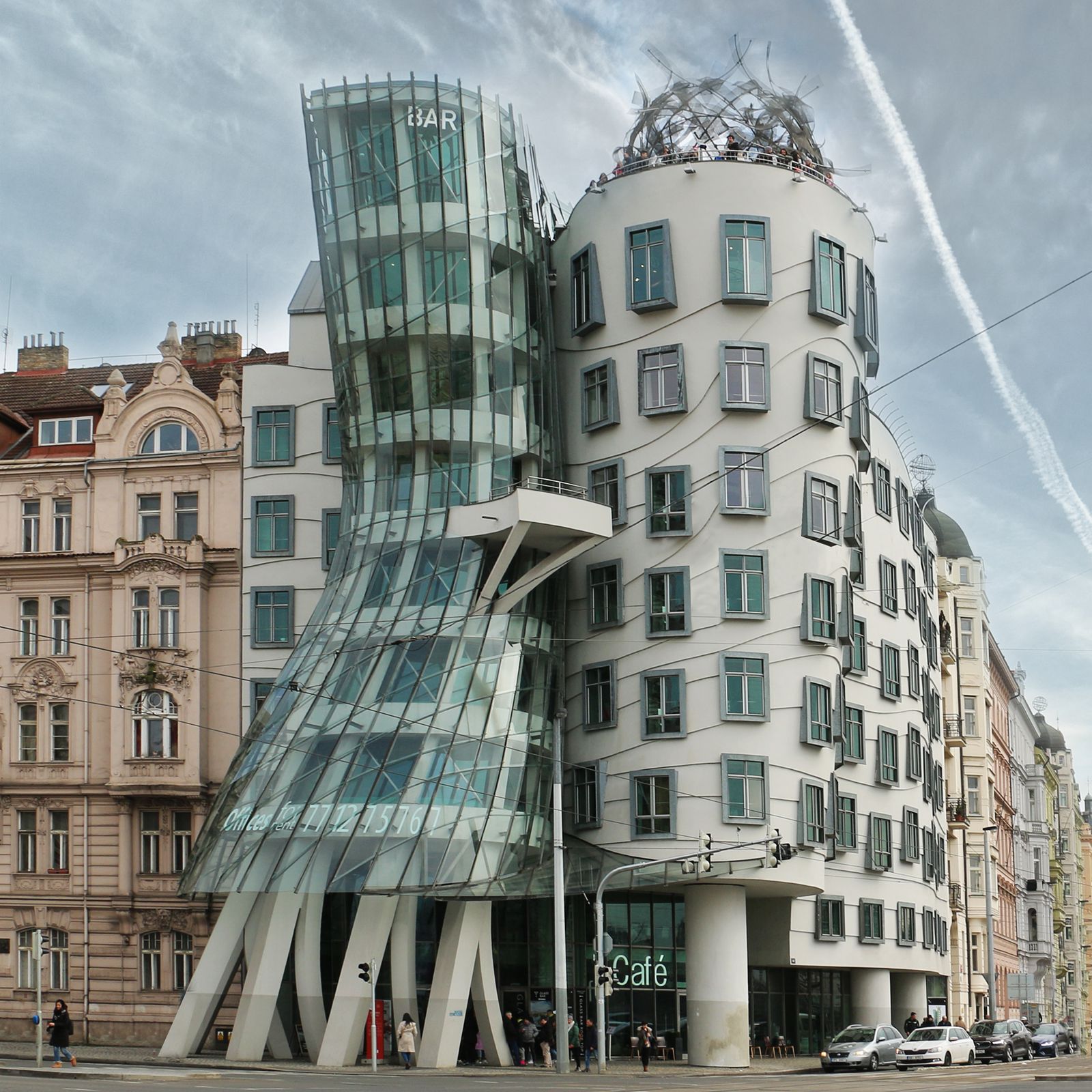
Dancing House, Prague (1996)
Designed with Czech architect Vlado Milunić, the Dancing House looks exactly like its name. Yes, imagine two dance partners leaning on each other mid-dance? The towers seem to be doing exactly that here. It stands on a site that was bombed during World War II, and the design emerged as a classic example of deconstructivism, the architectural approach popularized by Frank Gehry. Fragmented, unexpected, and full of character.