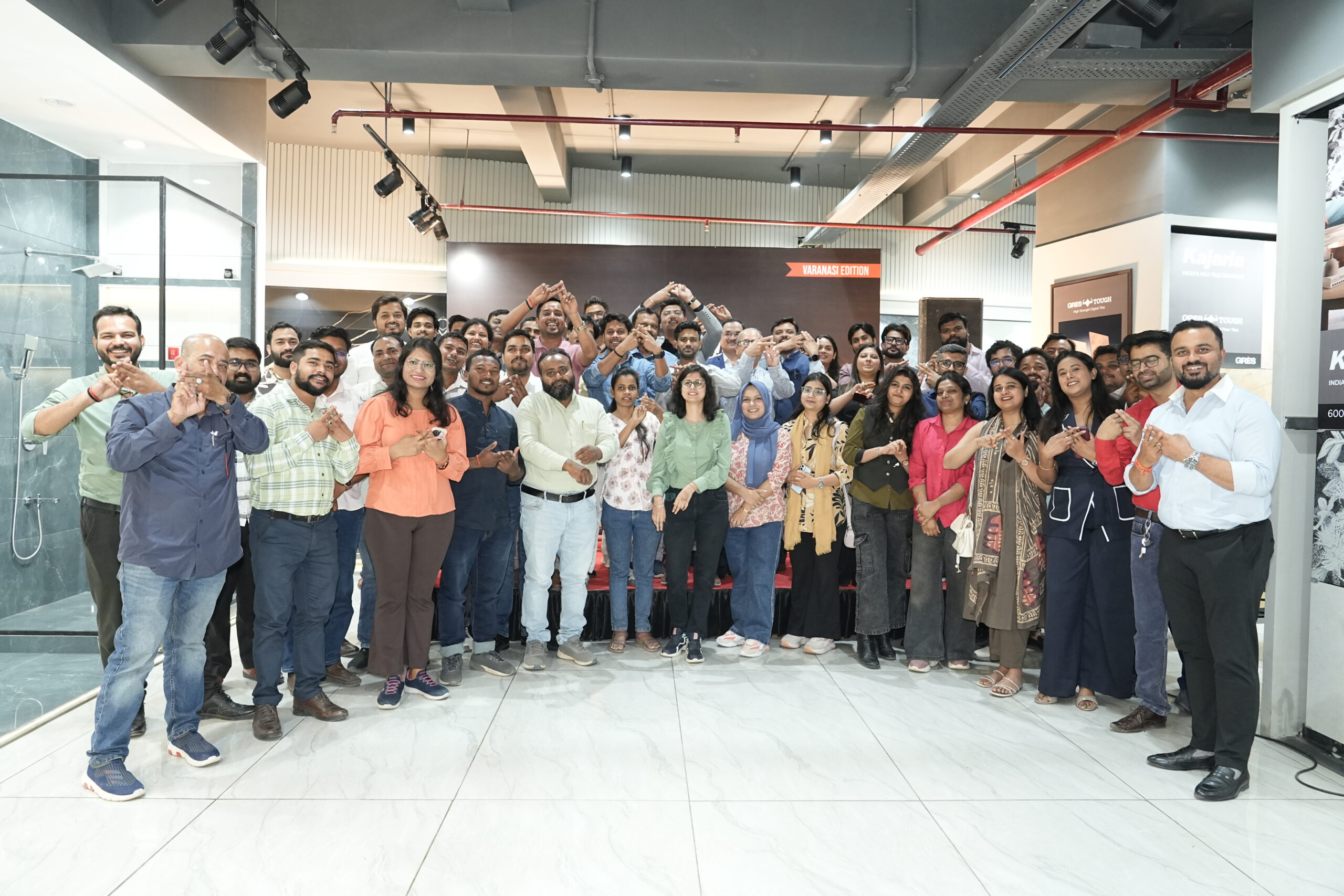
Kajaria Experience Centre, Varanasi | March 18, 2026
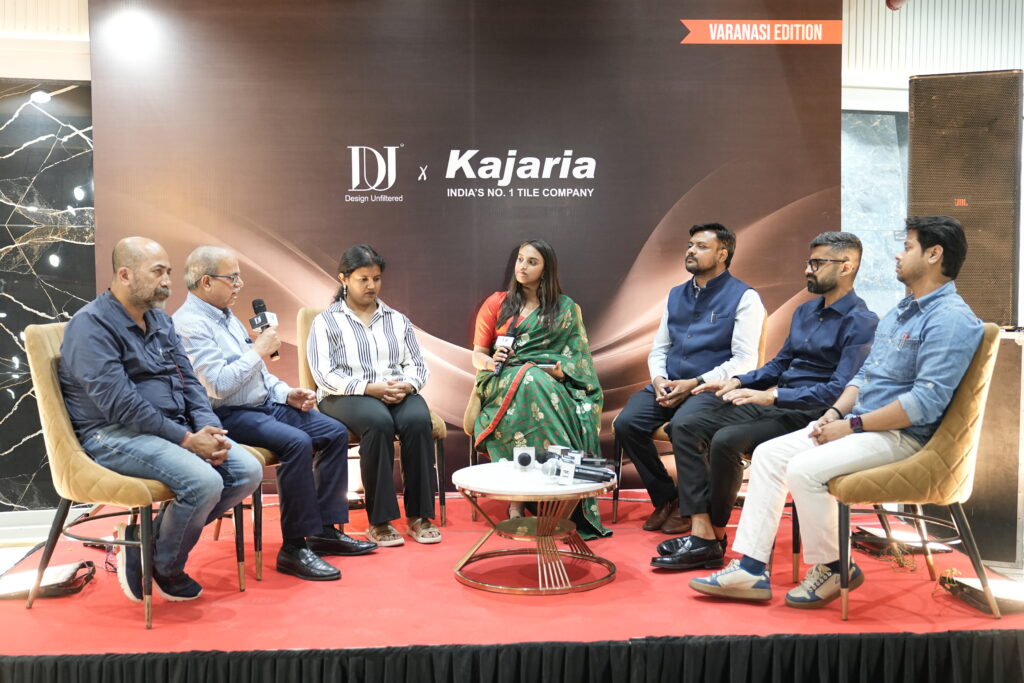
As part of its ongoing journey towards “26 Cities by 2026,” Design Unfiltered touched down its seventh city with the Banaras Edition—an evening dedicated to exploring the intersection of Money, Material, and Mindset within the context of one of India’s most layered cities.
Bringing together architects, artists, and industry professionals, the conclave focused on real, experience-led conversations around heritage, tourism, and the evolving design ecosystem in Kashi.
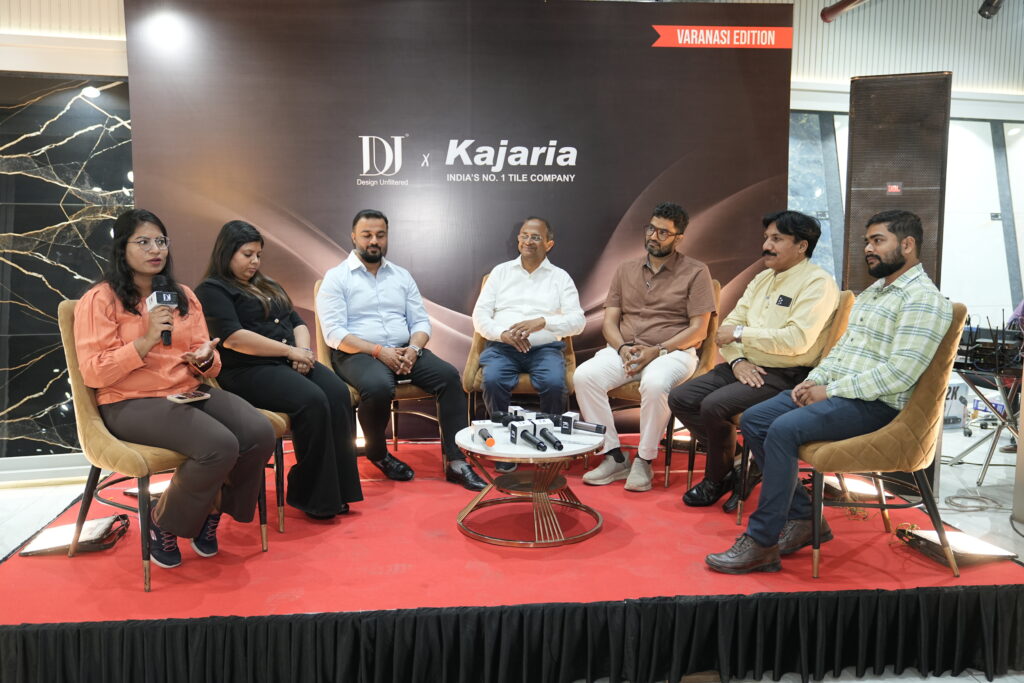
Opportunities in Kashi: Tradition, Tourism & the New Design Economy
This panel explored how Varanasi is navigating its identity between legacy and growth, while responding to increasing tourism and urban expansion.
Panelists:
- Ritesh Kashyap
- R.C. Jain
- Dhiraj Kapoor
- Arun Singh
- Krishna Kumar
The discussion highlighted the challenges of balancing heritage with modern interventions. Panelists emphasized that current practices often tend to superimpose modern solutions onto historic structures, rather than understanding the behavior and integrity of traditional materials.
The need to integrate rather than replace was a recurring theme, especially when dealing with older buildings where elements such as openings, ventilation, and services pose unique challenges.
The panel also reflected on how Kashi’s architectural identity is shaped by a confluence of regional influences, where materiality becomes the unifying factor. The importance of designing with context, climate, and orientation—rather than purely aesthetic considerations—was strongly emphasized.
From a broader perspective, tourism was discussed not just as an economic driver, but as an experiential and cultural force, shaping how the city evolves.
Challenges, Growth & Practice in a Changing Kashi
This session brought forward perspectives on practice, expansion, and the realities of working in a city undergoing rapid transformation.
Panelists:
- C.P. Chawla
- Anubhav Basu
- Abhijeet Choudhary
- Rohit Gupta
- Kunal Khera
- Saloni Singh
The conversation addressed key challenges such as heritage preservation, infrastructure gaps, and land constraints, alongside the growing demand driven by tourism and urban migration.
Panelists noted that while Kashi is witnessing significant infrastructural growth—including improved road networks and connectivity—there remains a need to ensure that development does not outpace cultural sensitivity.
The idea of tradition was critically examined, with discussions around how it is often imitated rather than understood, leading to confusion between authentic design and surface-level replication.
Practical insights into running a design practice also emerged—from the importance of networking and long-term relationship building, to navigating client expectations in a rapidly changing market.
Architect Saloni Singh highlighted a contemporary shift in client behavior, noting that platforms like Pinterest often shape design expectations. However, she emphasized that visual inspiration must be balanced with technical feasibility and contextual relevance, requiring deeper engagement between architect and client.
Material, Money & Mindset: Rethinking Design Practice
Across discussions, a key insight emerged—design is not driven by aesthetics alone, but by a combination of mindset, material understanding, and financial realities.
Material selection was discussed in the context of climate responsiveness and performance, rather than visual appeal. Local materials such as lime plaster and Chunar stone were highlighted for their relevance and longevity.
At the same time, panelists addressed the role of mindset in shaping practice, encouraging young architects to approach their careers with patience and clarity rather than urgency.
The relationship between the three themes was captured in the idea that:
“Material is mindset, money is boundary—and mindset drives both.”
Tourism, Identity & The Future of Kashi
The conclave also explored the impact of tourism on the city’s architectural and cultural landscape.
While the rise of luxury hospitality projects signals economic opportunity, panelists noted the continued importance of traditional spaces like dharamshalas, which remain integral to the city’s social and cultural fabric.
Concerns around over-tourism and loss of identity were also raised, emphasizing the need for a balanced approach that preserves the essence of Kashi while accommodating growth.
Kashi, In One Word
In a closing reflection, panelists were asked to define Kashi’s architecture in a single word. The responses captured the essence of the city:
Experience. Openness. A city you can feel. Timeless with layers. Eternally living. Zindagi ke saath bhi, zindagi ke baad bhi.
A Platform for Meaningful Dialogue
The Design Unfiltered Banaras Edition served as a platform for honest, grounded conversations, bringing together diverse perspectives from across the design community.
More than just a conclave, it reflected the platform’s larger vision of documenting real stories, challenges, and insights shaping the future of architecture and design in India.