Picture this. A residential tower in Pune that was designed in 2005 now runs its air conditioning system for an average of four additional months each year compared to when it was first commissioned. The building’s engineers did not change a single thing. The climate did.
This is not an isolated story. Across India, from the sun-scorched plains of Rajasthan to the increasingly humid coastal corridors of Chennai and Mumbai, buildings are working harder than they were ever designed to. Air conditioning loads are spiking. Cooling costs are climbing. And the structures we built even a decade ago are revealing thermal vulnerabilities that nobody quite anticipated.
Climate change is no longer a future problem for the design industry. It is a present-day construction challenge. And for architects, interior designers, builders and urban planners working across Indian cities, understanding how shifting temperatures affect building load is now as fundamental as knowing your structural loads.
What Is Building Loads and Why Does It Matter More Than Ever?
Building load refers to the total amount of energy a building must consume to maintain comfortable indoor conditions, covering heating, cooling, ventilation and lighting. In a tropical country like India, cooling load dominates the equation. The hotter and more humid it gets outside, the harder your building’s systems must work to keep occupants comfortable inside.
According to the Bureau of Energy Efficiency (BEE), buildings currently account for approximately 33% of India’s total electricity consumption, and a significant portion of that is driven by space cooling. The International Energy Agency projects that India’s cooling demand could increase nearly eightfold by 2050 if buildings are not designed to respond intelligently to thermal stress.
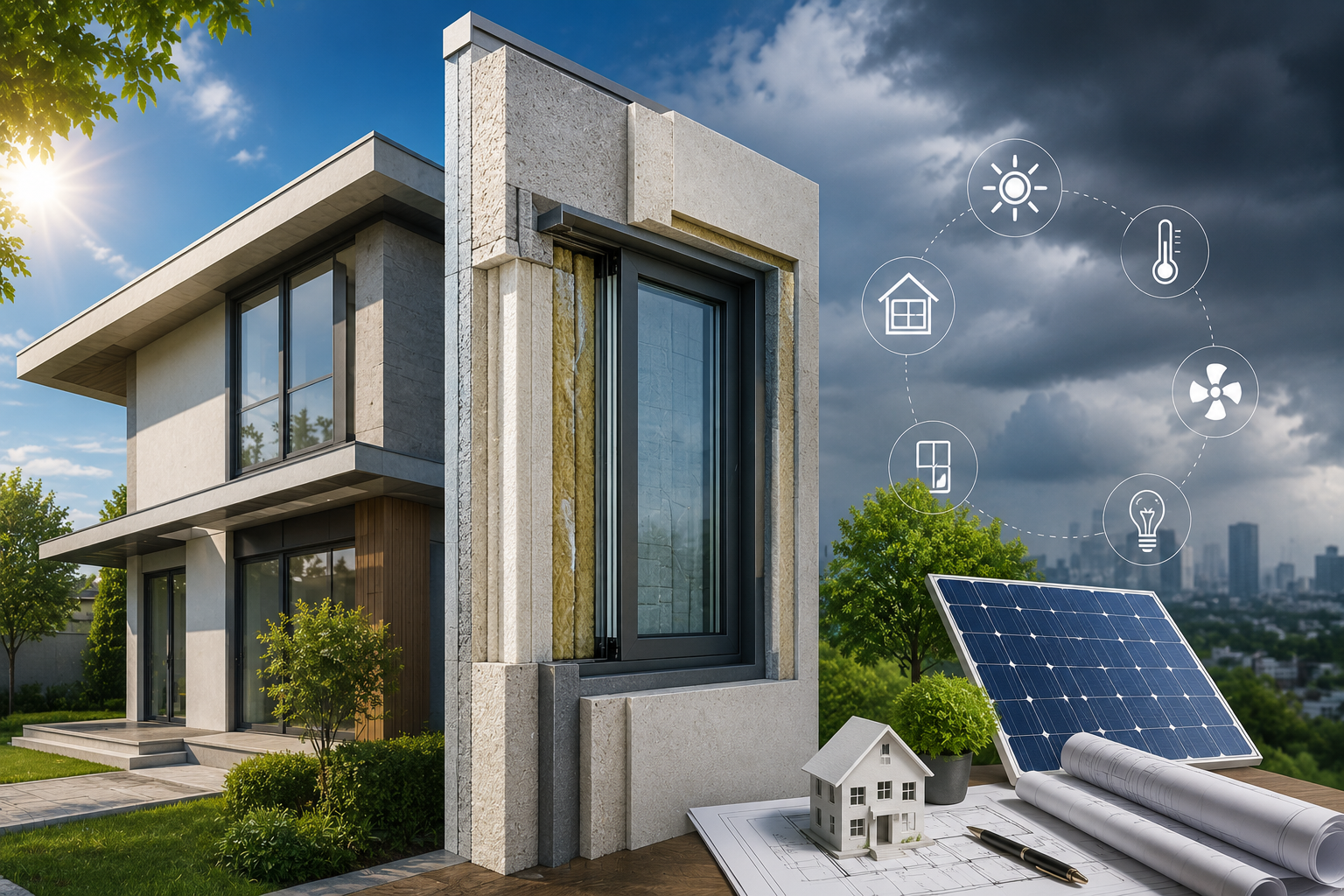
The building envelope, which includes your walls, roof and windows, is the first and most critical line of defence against this thermal pressure. How you design those elements determines everything from a resident’s comfort to a developer’s long-term operating costs.
Read More:- https://designunfiltered.com/how-buildings-are-constructed/
Rethinking the Wall: Your Building’s First Line of Thermal Defence
A wall in Indian architecture has traditionally been about structure and privacy. Today, it needs to be a thermal regulator. The materials you choose, the thickness you specify, and the layering strategy you adopt all directly influence how much heat enters a building and how quickly.
Thermal Mass and Reflective Strategies
High thermal mass materials like exposed brick, rammed earth and concrete absorb heat during the day and release it slowly at night. In dry climates like Jodhpur, Jaipur or Ahmedabad, this time-delay effect can meaningfully reduce peak cooling loads. Traditional Indian architecture understood this intuitively. The thick sandstone walls of Rajasthani havelis were not just aesthetic choices but masterclasses in passive thermal management.
In humid coastal cities, however, high thermal mass can sometimes trap heat and moisture. Here, lightweight insulated wall systems using autoclaved aerated concrete (AAC) blocks combined with reflective exterior finishes perform significantly better. AAC blocks are now widely used across Bengaluru, Hyderabad and Pune and offer a roughly 30 to 40 percent reduction in wall heat transmission compared to conventional red brick, while also being lighter and faster to construct.
Insulation Is No Longer Optional
Wall insulation has long been viewed as a feature of cold-climate design. That thinking is outdated. In a warming India, insulating your building envelope dramatically reduces the amount of heat that enters the occupied space, which in turn reduces the size and runtime of air conditioning equipment. Materials like expanded polystyrene (EPS), extruded polystyrene (XPS) and mineral wool are increasingly being incorporated into premium residential and commercial projects.
Green building rating systems such as GRIHA and IGBC Green Homes now explicitly reward wall insulation strategies as part of their energy efficiency credits. The Energy Conservation Building Code (ECBC) 2017, which applies to commercial buildings above a certain floor area, mandates minimum U-value requirements for walls, essentially making thermal performance a code compliance issue rather than just a design aspiration.
The Window Problem: When Glass Lets Too Much In
There is a certain contradiction at the heart of contemporary Indian architecture. We are building with more glass than ever before, chasing the look of transparency and lightness that international design has popularised. And yet glass, when poorly specified, is one of the most potent contributors to building heat gain.
A single-pane clear glass window can allow solar heat gain that increases indoor temperatures by 5 to 8 degrees Celsius in direct sunlight. Multiply that across the glazed facades of a modern office building in Chennai or Gurugram, and you begin to understand why some HVAC systems are running at near-capacity even in shoulder months.
Glazing Specifications That Work for the Indian Climate
Smarter window design involves three key parameters: the Solar Heat Gain Coefficient (SHGC), the U-value (rate of heat transfer), and the Visible Light Transmittance (VLT). In Indian conditions, low SHGC glazing with a value below 0.25 is increasingly recommended for west-facing and south-facing facades that receive intense afternoon sun.
High-performance options now available in the Indian market include the following.
- Double-glazed units (DGUs) with a low-emissivity (Low-E) coating that reflects infrared radiation while admitting daylight
- Reflective and tinted glass for high-solar-exposure zones, balancing aesthetics with thermal control
- Electrochromic or smart glass that adjusts its tint based on sunlight intensity, already appearing in premium hospitality and tech campus projects in India
- External shading devices such as fins, louvers and chajjas (traditional Indian sunshades) as passive companions to glazing, dramatically reducing solar ingress before it even reaches the glass
The window-to-wall ratio (WWR) is another critical design lever. For most building typologies in hot and composite climates, a WWR between 25 and 40 percent offers a workable balance between daylighting and solar heat control. Beyond 50 percent, you are essentially designing a heat trap unless your glazing specification is exceptional.
Practical Energy Tips for Buildings That Work With the Climate, Not Against It
Beyond the envelope, the way a building is serviced and operated has an enormous bearing on its energy performance. Here are strategies that professionals and homeowners alike can implement.
Orient First, Engineer Second
Building orientation is the cheapest energy strategy available. In most of India, placing the longest facades on the north and south axes while minimising east and west exposure reduces solar load substantially. This is not new knowledge; it is foundational passive design logic that modern site planning sometimes ignores in favour of plot efficiency.
Cool Roofs and Green Roofs
The roof is the surface that receives the most direct solar radiation in Indian latitudes. Cool roof coatings with a high solar reflectance index (SRI) can reduce roof surface temperatures by 20 to 30 degrees Celsius and bring down air conditioning loads noticeably in top-floor units. Cities like Ahmedabad and Mumbai have already piloted cool roof programmes at scale. Green or planted roofs add a further layer of insulation while also managing stormwater and supporting urban biodiversity.
Ventilation and Night Flushing
In cities where temperatures drop after sunset, designing for natural cross-ventilation and night flushing allows cool air to purge heat absorbed during the day from the thermal mass. This strategy works particularly well in composite climates and reduces the need for mechanical cooling during the shoulder seasons of March and October.
Energy-Efficient HVAC and Smart Building Systems
Specifying a 5-star BEE-rated air conditioning system over a 3-star model can reduce cooling energy consumption by 20 to 28 percent over the equipment’s lifetime. Variable refrigerant flow (VRF) systems are gaining popularity in premium residential and commercial projects for their ability to modulate output to actual demand rather than cycling on and off at full capacity. Paired with a building management system (BMS), these setups can achieve further energy savings by responding to occupancy patterns and real-time weather data.
Expert Insight: What Leading Indian Architects Are Saying
The conversation among design professionals in India has shifted noticeably. Climate-responsive design is no longer positioned as a niche sustainability credential. It is increasingly framed as risk management. Developers who invest in high-performance envelopes are finding that energy cost savings translate into higher occupant satisfaction scores in residential projects and lower operating expenditure in commercial ones, both of which ultimately support premium positioning and long-term asset value.
Architecture practices working on high-end residential projects in Bengaluru and Delhi-NCR are increasingly conducting solar studies and building energy simulations at the concept design stage rather than post-design, allowing envelope decisions to be driven by data rather than intuition. Simulation tools like EnergyPlus, DesignBuilder and Autodesk Insight are entering the mainstream workflow of forward-thinking Indian firms.
Future Trends: What the Next Decade of Climate-Adaptive Design Looks Like
The direction of travel is clear. Building envelopes will become increasingly active rather than passive. Phase-change materials embedded in wall systems will absorb and release heat at predetermined transition temperatures, acting almost like thermal batteries within the structure. Photovoltaic-integrated glazing will allow windows to generate electricity while controlling solar gain simultaneously.
Urban heat island mitigation will shape macro-scale planning decisions. Cities are beginning to mandate minimum green cover ratios, reflective surface requirements and heat resilience assessments for large developments. India’s own Smart Cities Mission is increasingly incorporating climate resilience metrics into urban planning frameworks.
At the materials level, bio-based insulation products using hemp, bamboo composite and recycled agricultural waste are moving from experimental to commercially viable in several Indian markets. These materials offer thermal performance comparable to synthetic options while carrying significantly lower embodied carbon, a metric that the next generation of green building standards will scrutinise far more rigorously.
The Takeaway: Build for the Climate You Have, Not the One You Grew Up In
Every wall you design, every window you specify and every energy system you select is either part of the problem or part of the solution. The buildings going up in Indian cities today will be standing in 2075, operating in a climate that is likely to be significantly warmer and more unpredictable than today’s. The design decisions made at a drafting table or BIM screen in 2025 have consequences that stretch decades into that uncertain future.
Climate-adaptive design is not about sacrificing beauty or budget. Done well, it delivers buildings that are quieter, more comfortable, less expensive to run and more connected to the logic of their local environment. That is not a sustainability argument alone. It is a compelling design argument.
The best buildings of the next decade will be those that feel effortless to live and work in, where you almost forget that the architecture is silently, intelligently working to keep you comfortable without running up your electricity bill. That is the future worth designing toward.
About Design Unfiltered
Design Unfiltered is a national platform that spotlights emerging architects from Tier-2 and Tier-3 cities, giving them the recognition they deserve. Active across 26 cities, it runs conclaves, talks, podcasts, and films bringing together architects, designers, and product brands. It creates an ecosystem where innovation, craft, and commerce meaningfully meet.
FAQs
How does climate change directly increase the cooling load of a building in India?
Rising ambient temperatures mean the temperature difference between the hot outdoors and the desired indoor comfort level grows larger. Air conditioning systems must work longer and harder to maintain that gap, consuming more electricity in the process. Extended hot seasons, increased frequency of heat waves and the urban heat island effect in Indian metros compound this challenge further. Buildings designed before these shifts were anticipated often lack the thermal envelope performance needed to handle the new thermal load efficiently.
What is the most cost-effective way to reduce building heat gain in an existing Indian home?
For existing buildings, applying a cool roof coating is typically the highest-impact, lowest-cost intervention available. This alone can reduce top-floor indoor temperatures by several degrees. The next priority is addressing west-facing windows, either through external shading like fabric blinds or metal fins, or through the application of solar control window films that reduce heat gain without significantly compromising daylight. Together, these two upgrades can meaningfully reduce air conditioning runtime and energy bills without requiring structural changes.
Are AAC blocks better than red brick for energy efficiency in Indian construction?
In most Indian climate zones, yes. AAC blocks offer lower thermal conductivity than conventional red clay brick, which means they transmit heat more slowly through the wall. They are also significantly lighter, which reduces structural loads and speeds up construction. They perform especially well in hot and dry as well as composite climates. In coastal humid zones, they should be used with appropriate waterproofing and vapour management detailing to prevent moisture absorption. For premium projects aiming for IGBC or GRIHA ratings, AAC blocks combined with appropriate insulation and reflective finishes can contribute substantively to energy credit achievement.