Buildings are among the planet’s biggest polluters. They can also become its most elegant solution
Every building you have ever entered made a choice about how much energy to consume, how much waste to generate, and how deeply to embed itself into the natural world. In most cases, that choice was made carelessly. Today, architects are making a different one.
The construction industry is responsible for roughly 40% of global energy consumption and a significant share of carbon emissions , figures that dwarf those of aviation or shipping, yet rarely make headlines. As cities expand rapidly across Asia, Africa, and Latin America, the stakes are rising. But so are the possibilities. Sustainable architecture has evolved from an idealistic fringe movement into a serious, scalable response to the climate crisis.
The Hidden Cost of Concrete and Steel
Before a building is ever occupied, it has already left a deep environmental footprint. The production of cement alone accounts for around 8% of global CO₂ emissions. Steel, glass, and synthetic insulation add to that toll. This embodied carbon is a dimension of architecture that traditional design long overlooked.
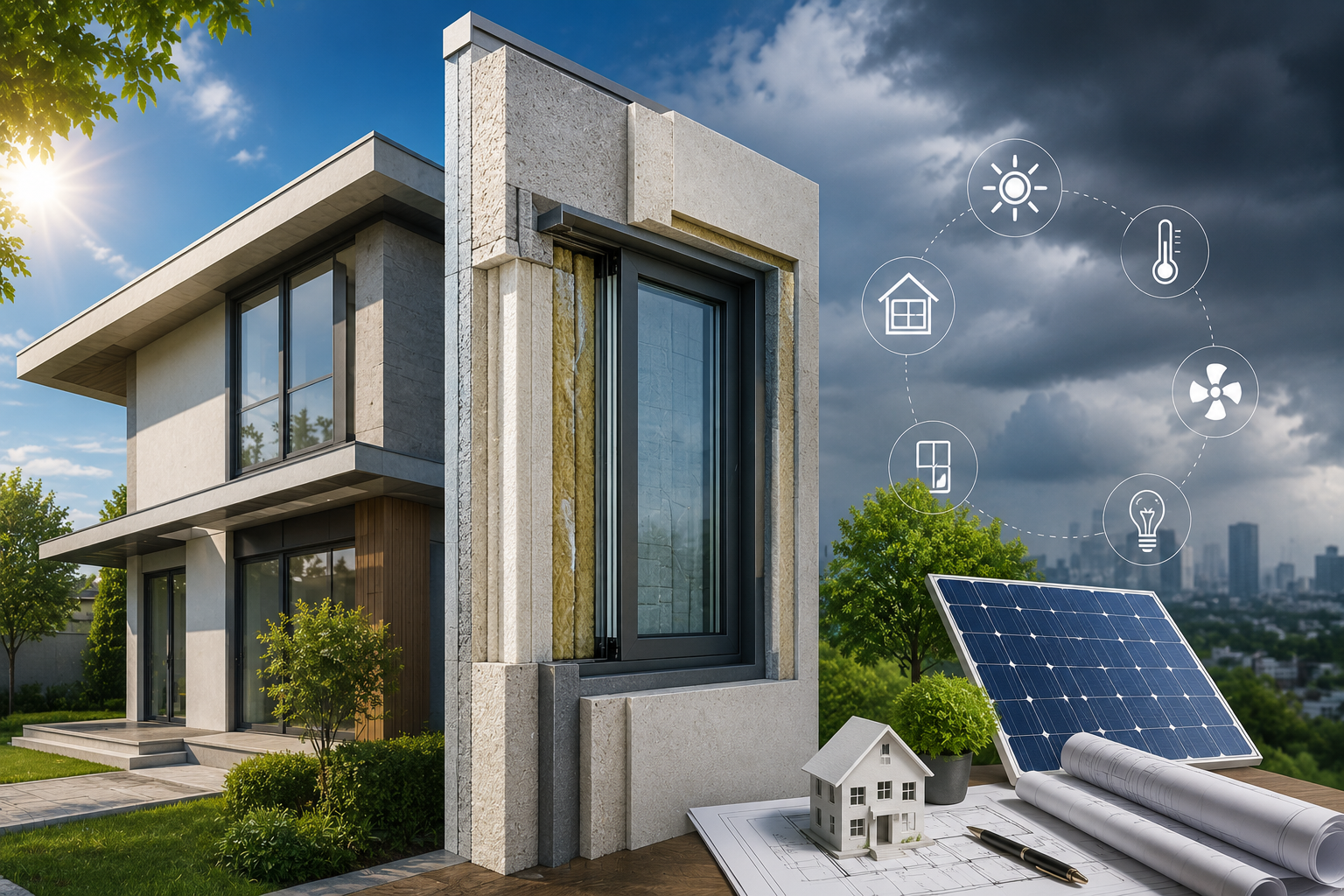
Modern architects are now rethinking materials from the ground up. Bamboo, which grows faster than virtually any other building material and sequesters carbon as it grows, is being used in structural applications across Southeast Asia. Cross-laminated timber is replacing concrete in medium-rise buildings across Europe and North America. Compressed earth blocks and lime-based plasters, materials as old as civilization itself, are making a quiet comeback.
Learning from the Past to Build the Future
There is a certain irony in the fact that some of the most climate-intelligent buildings on earth are also among the oldest. The wind-catchers of Persia, the thick-walled courtyard houses of North Africa, the elevated stilt homes of Southeast Asia , each was engineered, without computers, to work with local temperatures, winds, and rainfall. These traditions understood passive design intuitively: shade what needs shading, channel breezes where they are needed, store the coolness of the night for use during the day.
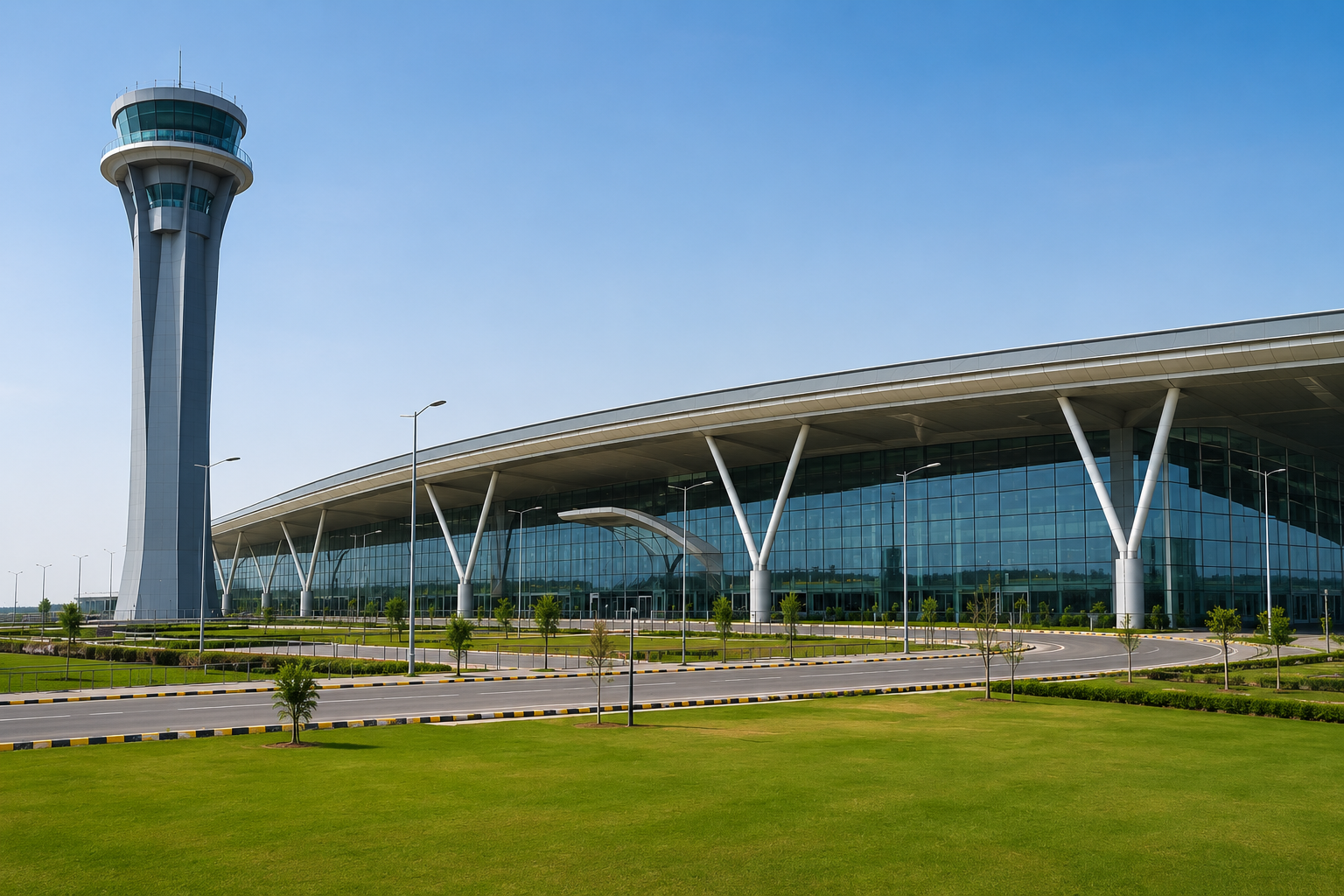
Contemporary architects are returning to these principles, fusing them with modern precision. In Singapore, the Jewel Changi Airport collects rainwater for irrigation and cooling. In Copenhagen, new residential towers are oriented to maximise natural light while minimising heat gain. In India, studios are adapting the jali screen ,an ancient latticed facade into a breathing skin that cuts solar load without sacrificing daylight.
Buildings That Generate More Than They Consume
Passive design reduces a building’s appetite for energy. But the next frontier is buildings that actually produce it. Net-zero and energy-positive buildings , those that generate as much or more energy than they consume are moving from experiment to mainstream. Solar panels are now being integrated into roof tiles, glass facades, and even window coatings. Ground-source heat pumps draw stable underground temperatures to warm buildings in winter and cool them in summer, without combustion.
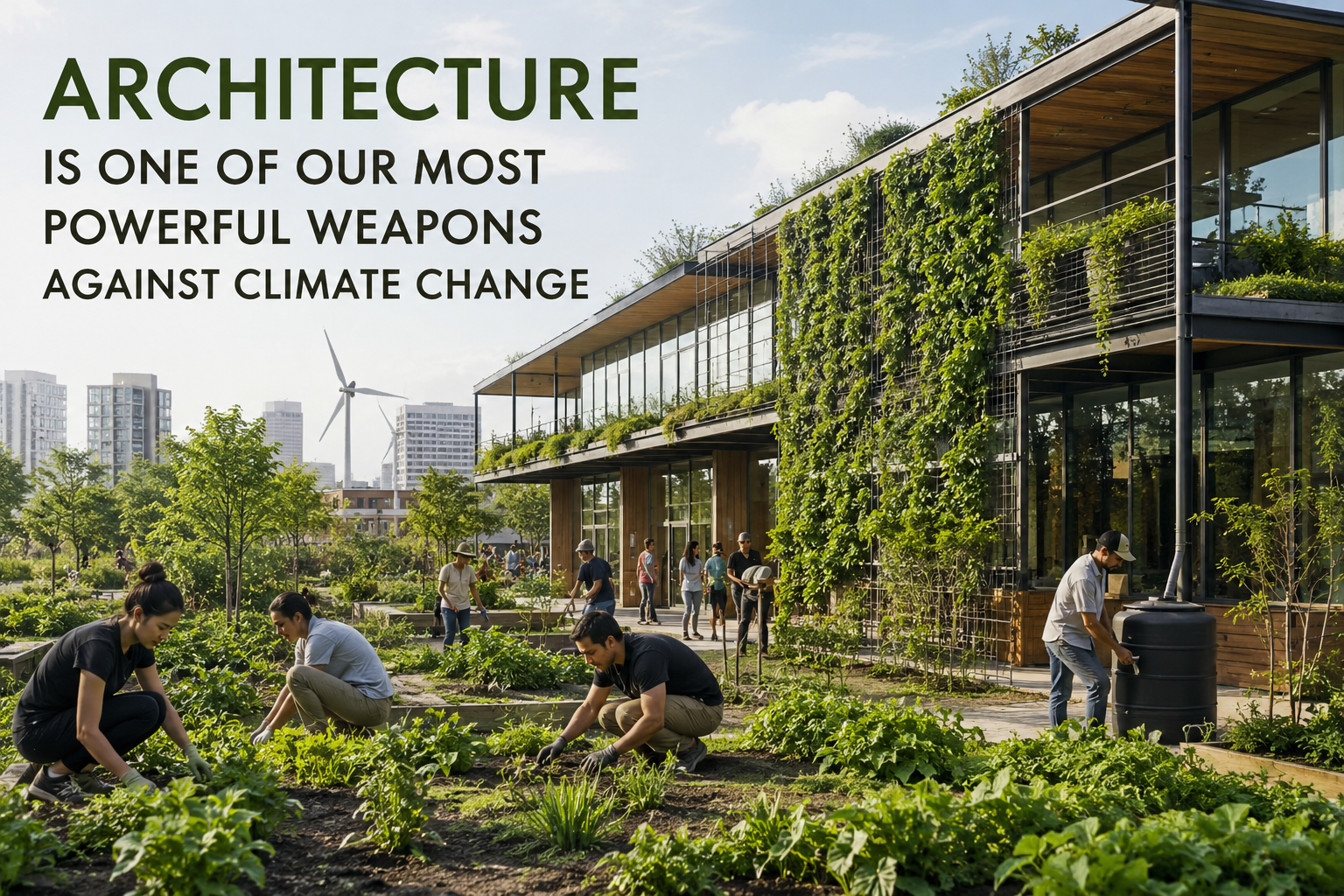
Green roofs and living walls do double duty: they insulate the building while absorbing carbon dioxide, reducing the urban heat island effect, and managing stormwater runoff. In cities where every square metre matters, vertical gardens are reclaiming surfaces previously left as dead concrete.
Designing Cities, Not Just Buildings
Individual buildings matter, but the scale at which architecture can make its greatest impact is the city. Urban planning decisions where homes are built, how close they sit to workplaces and schools, how much space is given to cars versus people ,determine the carbon footprint of millions of lives simultaneously.
Cities like Amsterdam, Bogotá, and Oslo have demonstrated that designing for walking and cycling reshapes how people relate to their surroundings, improves public health, and dramatically cuts emissions. Wide, tree-lined streets lower surface temperatures, reduce flooding, and clean the air. The city, when designed well, becomes a living system.
A Responsibility That Cannot Be Delegated
None of this happens automatically. Sustainable design often requires greater upfront investment, deeper collaboration between architects, engineers, and policymakers, and a willingness to look beyond conventional aesthetics. Governments need to set higher standards and enforce them. Developers need to be held accountable for the long-term performance of what they build.
But the foundations are there. The knowledge exists. The materials exist. The precedents from Singapore to Scandinavia, from ancient Persia to modern Pune already prove that buildings can be beautiful, functional, and kind to the planet at the same time.
Architecture will not solve the climate crisis alone. But it can do something perhaps equally important: it can make sustainability visible, tangible, and aspirational. Every green roof, every sunlit atrium, every building that breathes with its climate rather than against it is an argument made in glass and timber and stone that a better-built world is possible.