Some spaces impress you instantly.
Others stay with you quietly.
The work presented by Akanksha Dadhich at the Design Unfiltered Conclave belonged firmly to the second category — architecture that doesn’t scream for attention, but slowly settles into your senses.
And honestly, that’s what made it memorable.
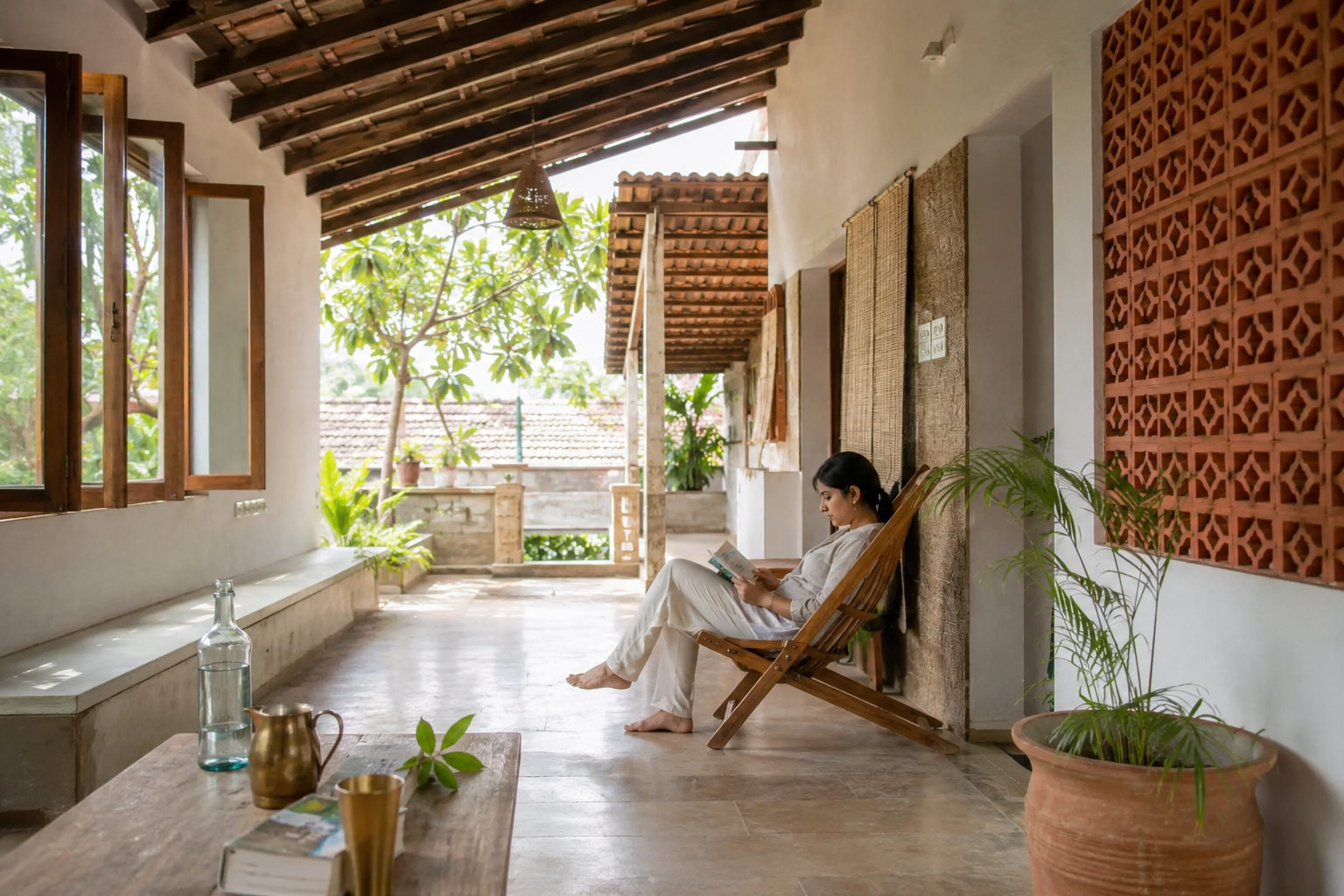
At the heart of the presentation was a deceptively simple idea: the moment of pause.
Not the Instagrammable kind of pause.
Not the “wait-I-need-to-take-a-picture-of-this-corner” pause.
But the kind where a space quietly makes you exhale.
A House Isn’t Just Rooms. It’s a Feeling.

One of the most interesting things about Dadhich’s approach is how she talks about homes less like floor plans and more like experiences.
For her, spatial organization isn’t just about where the kitchen goes or how big the living room is. It’s about how the house unfolds emotionally. How you move through it. What you see first. Where light enters. Where you instinctively slow down.
Even transitional spaces — lobbies, staircases, corridors — aren’t treated like filler episodes between the “main” spaces. They’re part of the story.
And that’s rare.
Because let’s be honest: most staircases today are either aggressively sculptural or completely forgettable.
Here, they become journeys through texture, light, and material.
The Courtyard Is the Main Character
Every project has that one element quietly holding everything together.
In these homes, it’s the courtyard.
Not in a dramatic, palace-core kind of way. More like the emotional Wi-Fi router of the house — connecting everything without announcing itself.
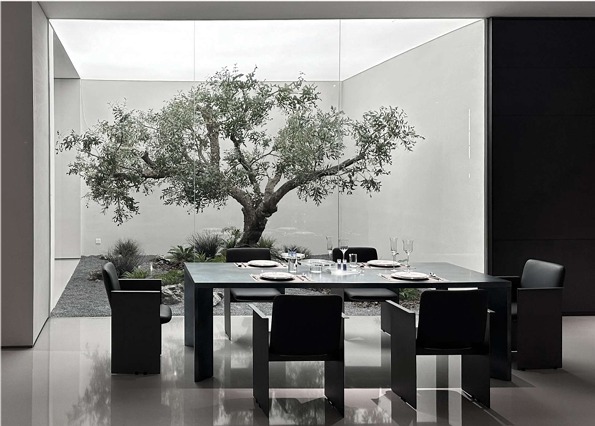
The courtyard brings in light, ventilation, visual continuity, and a surprising sense of calm. Rooms don’t feel isolated from one another because everything remains tied to this central spine.
There’s also something deeply human about it.
You always know where you are in the house.
You never feel disconnected from light or air.
And somehow, the home feels bigger emotionally than it does physically.
That’s good architecture doing invisible work.
Materials That Don’t Try Too Hard

One line from the presentation summed up the studio’s material philosophy perfectly:
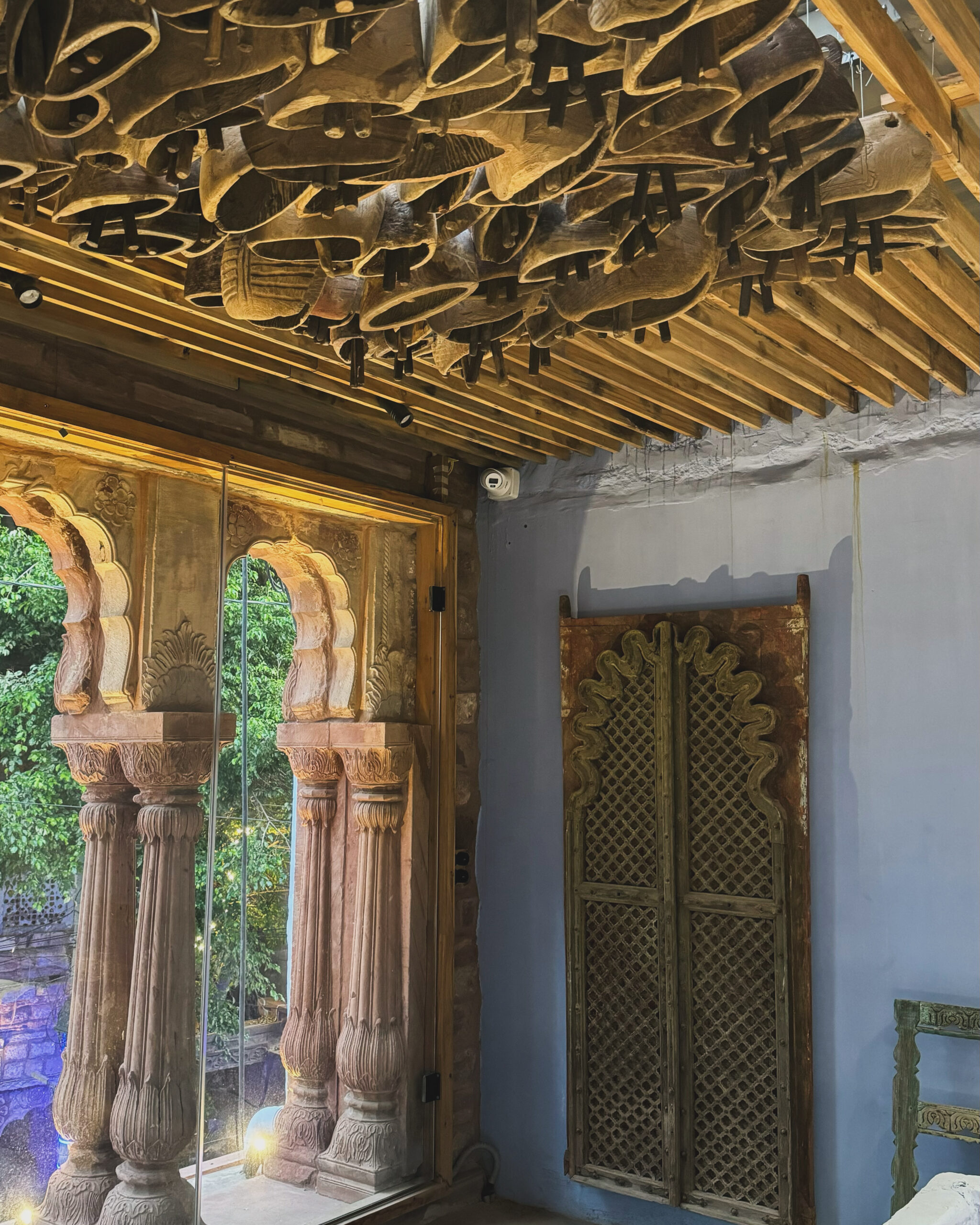
“Materials must not resist time — but belong to it.”
And you could see that idea everywhere.
Jodhpur stone. Kota stone. Natural wood. Lime-finish walls. Marble. Teak.
Nothing felt selected to impress for six months on social media before aging badly.
Instead, the materials feel calm. Honest. Grounded.
The kind that get better with time instead of demanding constant maintenance and validation.
Which, if we’re being fair, is also an excellent life philosophy.
Color, But Make It Subtle
Another refreshing aspect of the work was its relationship with color.
Or rather, its refusal to overdo it.
The base palette across the interiors remains muted and neutral, while personality enters softly — through fabrics, rugs, artwork, and occasional accents.
In other words: the walls are not competing with you for attention.
A radical concept in 2026.
The presentation described it best:
“Colour, only where it matters.”
And that restraint makes the spaces feel far more luxurious than excessive ornament ever could.
Redefining Luxury (Without the Gold-Plated Drama)

Perhaps the strongest takeaway from the presentation was its quiet redefinition of luxury.
Luxury here isn’t about excess.
It isn’t chandeliers yelling from double-height ceilings.
It isn’t marble used like a personality trait.
Instead, luxury becomes:
- natural light,
- breathable spaces,
- tactile materials,
- emotional comfort,
- and the confidence to not overdesign.
There’s a maturity to that approach.
The spaces trust you to feel them rather than forcing you to admire them.
From Sacred Monuments to Intimate Homes
What made the presentation especially compelling was the contrast between scales.
On one end was the monumental Hanuman sculpture project — deeply spiritual and symbolic.
On the other were quiet residential interiors designed for everyday life.
Completely different typologies.
Completely different emotional registers.
And yet, the same philosophy tied them together:
sensitivity, restraint, permanence, and emotional resonance.
The underlying message felt clear:
Architecture isn’t just about building structures.
It’s about creating places people emotionally return to — even when they’ve left them physically.
And maybe that’s what a well-designed space really does.
It lets you pause for a second longer than you expected.
Perhaps that is what meaningful architecture ultimately does — it does not merely shelter life, but gently teaches us how to slow down and inhabit it more consciously.