Threads: Transitioning from Family to Fashion!
NIDO Homes
Trikuta Nagar, Jammu
Sachi Anand
Family is not just a group of humans living together; it’s a value, an emotion. While there are so many things that bind them together, the place where they stay becomes the most prominent amongst all those factors. In this project, we’re discussing the journey of one such home becoming a commercial setup – a fashion studio to be precise. Let us get started.
UnFilltered (Brief)
This project involved the transformation of a former family residence into a contemporary fashion studio. While the building carried personal and spatial memories, the client’s brief was to move away from a dated residential character and create a space that reflects the identity and workflow of a modern fashion brand.
Filtering Out the Challenges
A key challenge was adapting a residential structure into a fashion studio without altering its inherent scale or character. The decision to retain original doors, openings, and flooring limited conventional planning flexibility, requiring careful spatial reorganization within existing constraints.
Another challenge was achieving a balance between sentiment and functionality. The space needed to support professional studio operations while still acknowledging its past. Design decisions had to remain sensitive to the existing fabric while meeting contemporary requirements, without resorting to stylistic imitation or excessive intervention.
UnFiltered (Philosophy)
The design approach focused on respecting the existing structure while carefully reworking the layout to support new studio functions. Spaces were reorganized to accommodate design development, production, and client interaction, while maintaining the original scale and sense of familiarity. Rather than preserving the past in a literal way, the design allows selected elements to inform the new spatial experience.
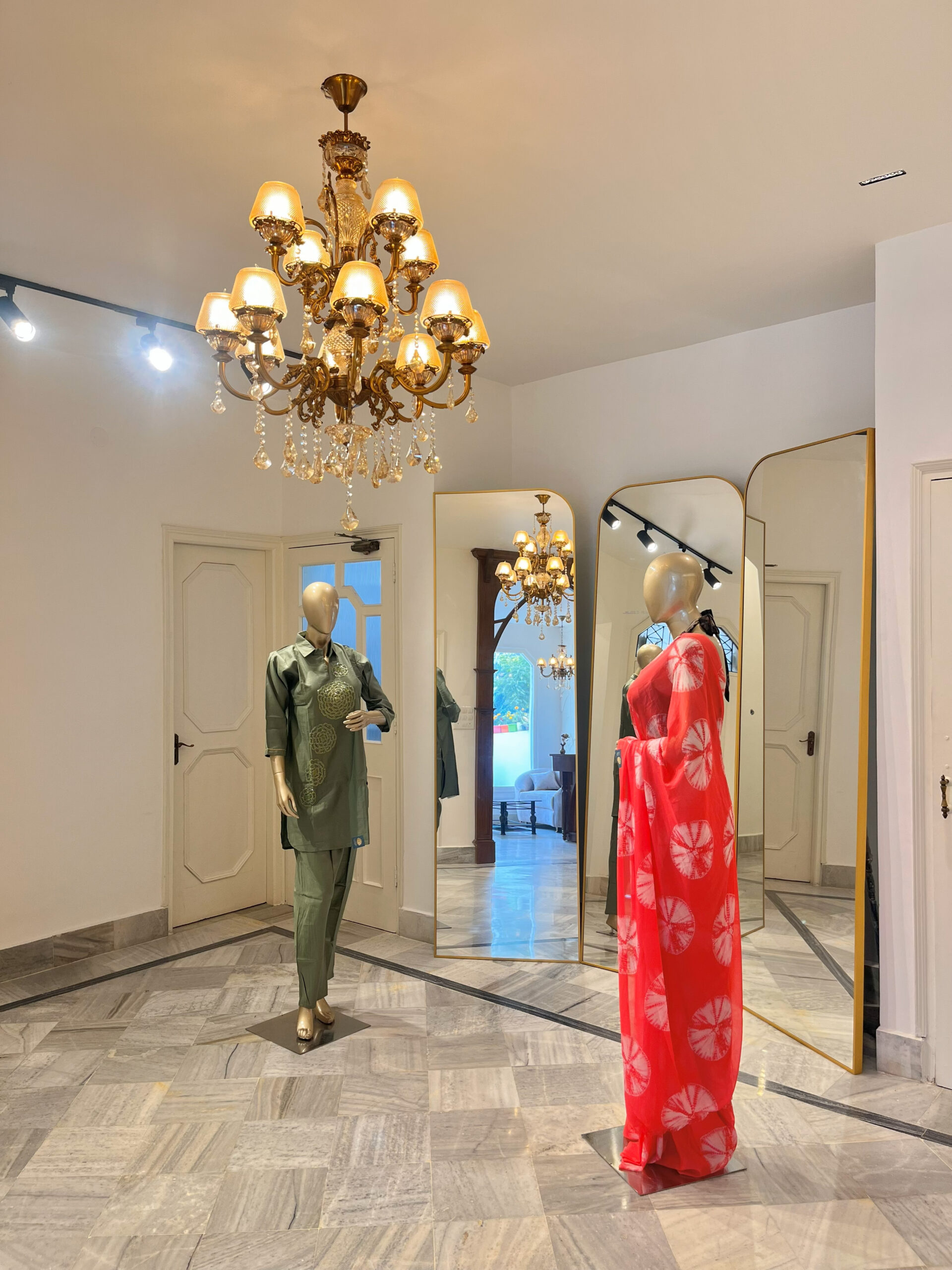
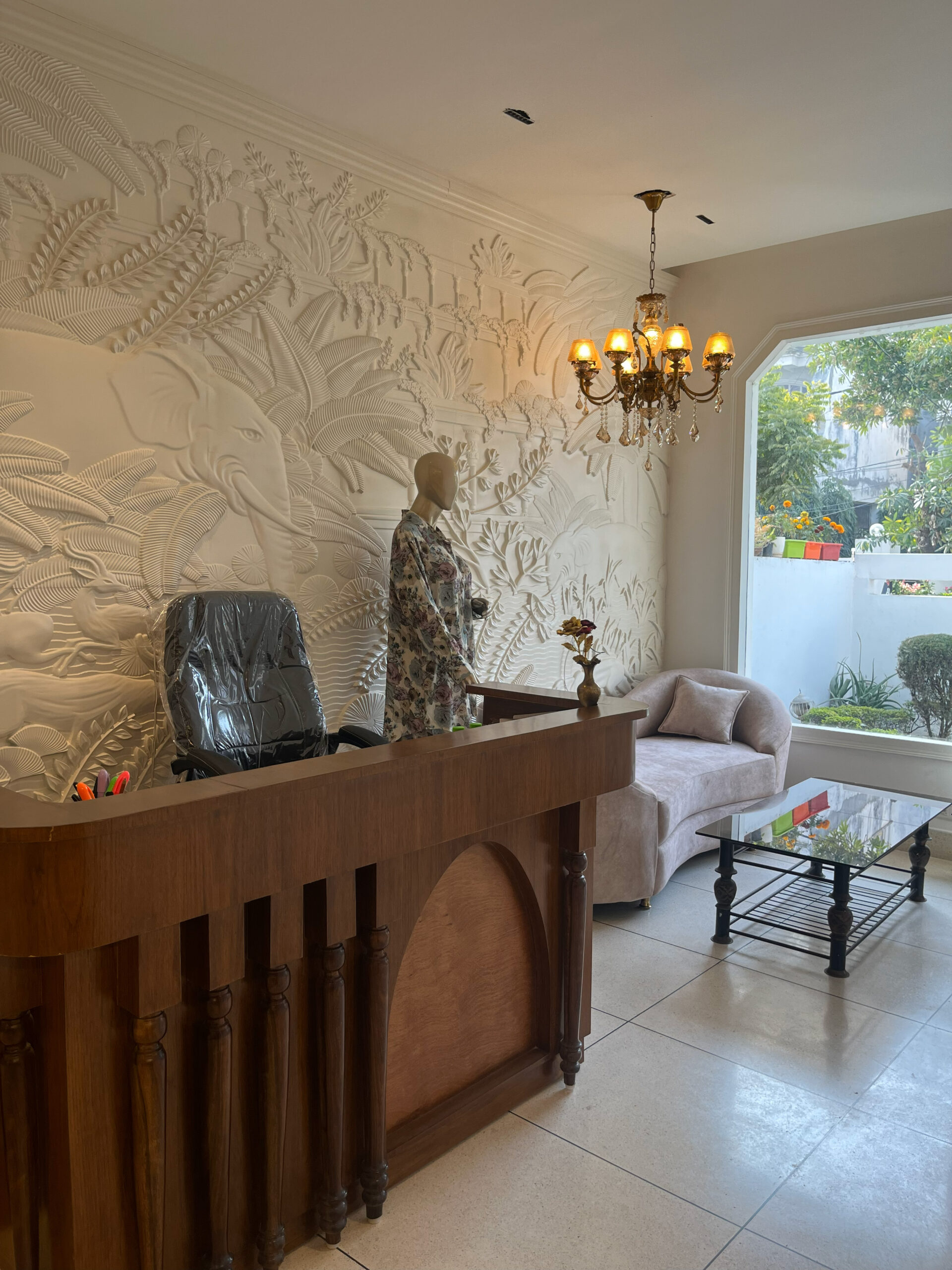
The design approach was guided by respect for the client’s ancestral home and the emotional value attached to it. From the outset, there was a conscious decision to retain the original scale and proportions of the structure. Elements such as door dimensions, window heights, and overall spatial geometry were preserved to ensure continuity with the existing building. The original marble flooring was retained and repolished, allowing the old essence of the house to remain present within the transformed space.
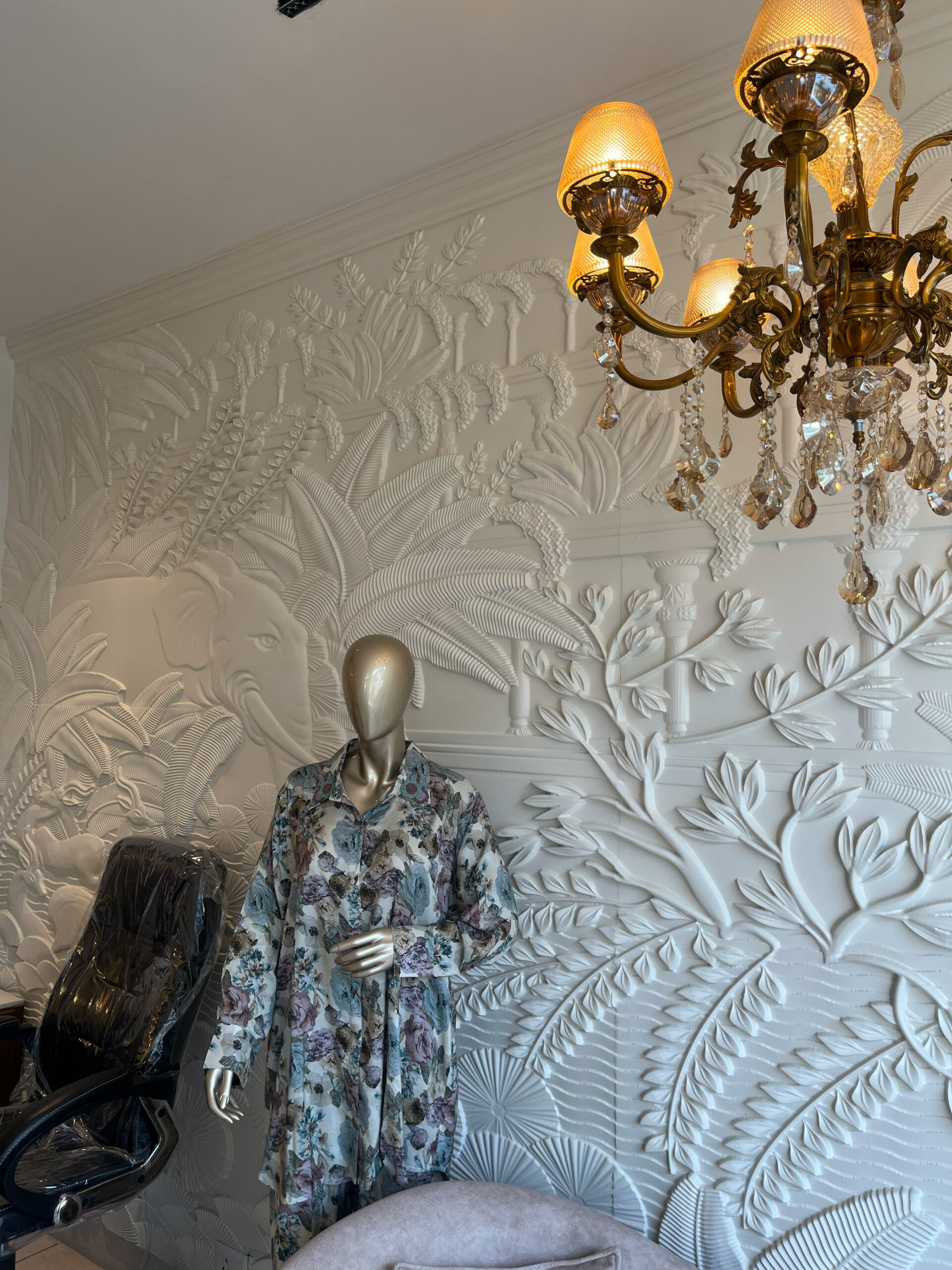
Rather than introducing a contrasting modern boutique aesthetic, the design adopts custom heritage inspired elements that sit comfortably within the existing architectural framework. Warm wood tones and ivory finished surfaces were chosen to act as a bridge between the old and the new. These materials allowed the space to evolve functionally while remaining visually grounded in its origins. The neutral palette also ensures that the fashion pieces remain the primary focus within the studio.
Figuring Out the Material/s
Material choices and detailing were kept restrained and intentional, allowing old and new elements to coexist without direct imitation. The result is a studio that feels grounded yet contemporary, balancing creative energy with a sense of familiarity. This transformation demonstrates how adaptive reuse can respect memory while enabling evolution, creating a workspace that reflects both heritage and progress.
- The primary use of wood for custom architectural elements adds warmth and grounds the space in its original residential context.
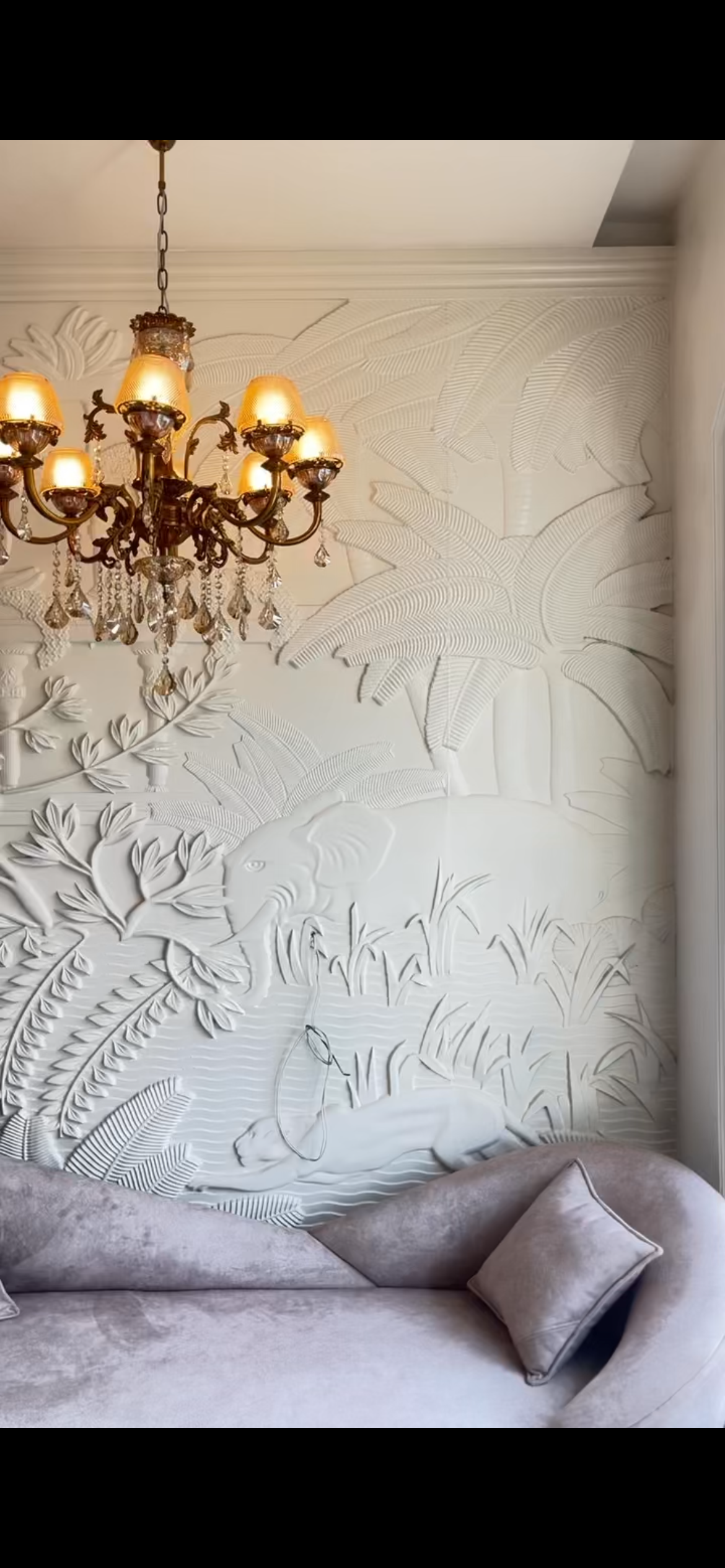
- Ivory duco finish on HDMR used for select surfaces to create a neutral and controlled backdrop suitable for studio functions.
- Champagne and brass finishes introduced in metal detailing, lighting, and hardware for subtle contrast.
- Limited and restrained material palette to maintain clarity between old and new interventions.
- Finishes selected for durability, ease of maintenance, and adaptability to evolving studio needs.
Unique Features
The project’s defining feature lies in its restraint. Original doors were retained as physical reminders of the home’s past, helping maintain a sense of continuity as the space took on a new role. The use of wood and ivory tones creates warmth and cohesion while providing a neutral backdrop for colourful garments and textiles.
Rather than overshadowing the fashion within, the architecture supports it quietly. The project demonstrates how minimal intervention and material sensitivity can allow an ancestral structure to transition into a new function while preserving its identity.