
Century-Old School Redevelopment in Banda | Sustainable Architecture Case Study | Design Unfiltered
Introduction: A Story Beyond Architecture
Being in the media business, telling stories of architecture and design, there are rare moments that truly move us — this was one of them. At Design Unfiltered, we work for such moments. Moments where a project goes beyond buildings and becomes about CHANGE. Set in Banda (a small town in UP), this school is one such story — where a 100-year-old legacy is not just preserved, but gently reimagined for a new generation. The design transforms the school into a safe, welcoming, and future-ready place for learning. DU presents the design story of this particular one, with utmost pride. Read on…
The feature here talks about redeveloping a century-old school in India, which involved transforming a primary school into a modern and inclusive learning environment. It responds to the need for better educational spaces while preserving the institution’s historic identity. Designed for young students and the community, the campus uses locally inspired brick architecture and climate-responsive strategies to create comfortable, naturally lit, and well-ventilated spaces.
Climate-responsive design for future-ready learning
Redeveloping a century-old school in India can come with its own share of challenges, and which is why the project is so special. The design responds to the need for a progressive educational space that nurtures curiosity, inclusivity, and environmental responsibility, transforming the aging institution into a campus that is both forward-looking and deeply rooted in its context.
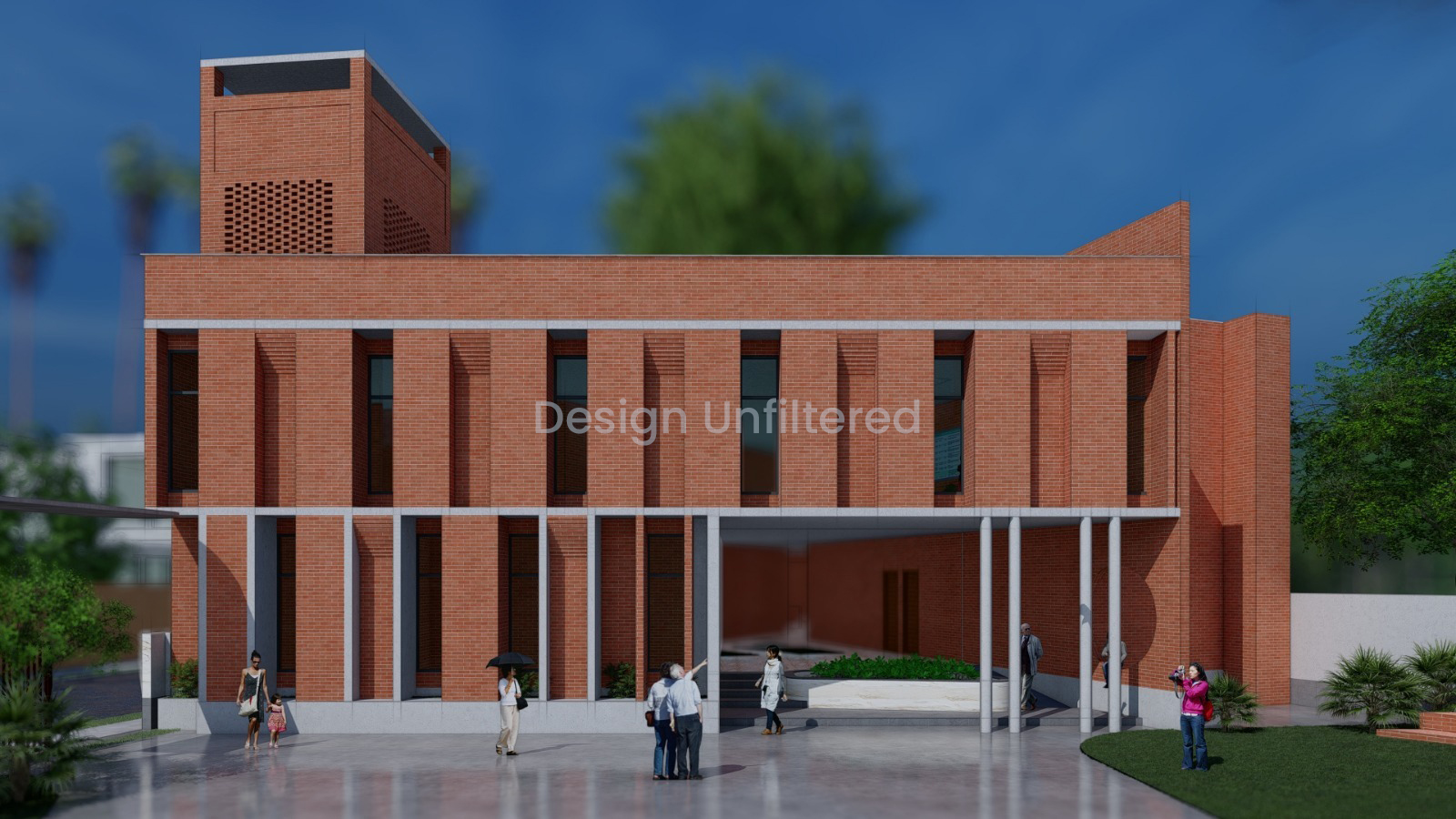
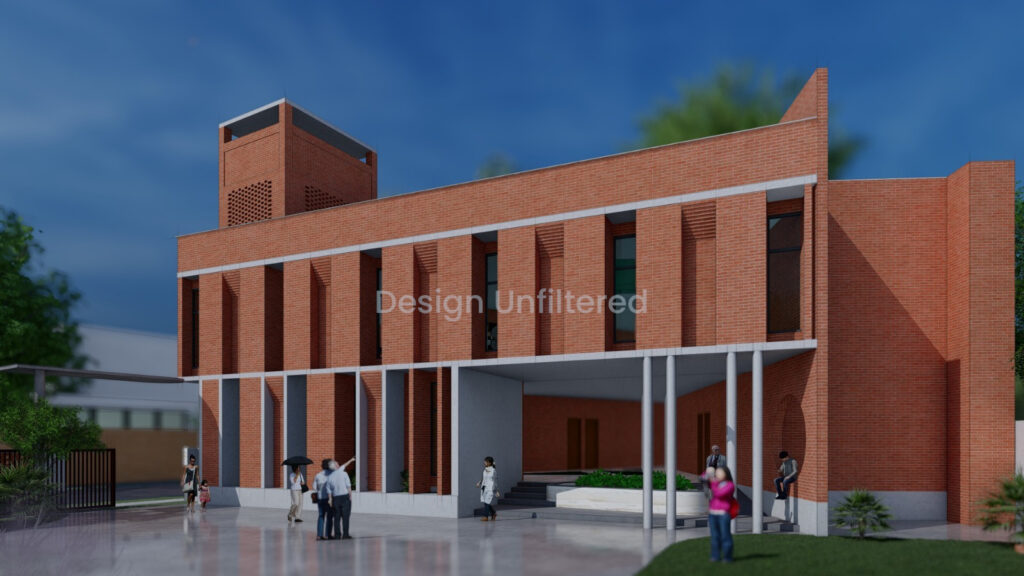
The architectural language draws inspiration from traditional masonry construction prevalent across Uttar Pradesh, expressed through the extensive use of brick as the primary material. Carefully articulated brick façades create rhythm, depth, and texture, while also acting as passive climatic devices that filter light and reduce heat gain.
Recessed openings, shaded corridors, and perforated brick elements allow natural ventilation and daylight to permeate the interiors, reducing reliance on mechanical systems and reinforcing the project’s commitment to sustainability.
Making way for student-centric learning
Equally central to the design is the creation of a student-friendly environment that encourages interaction, exploration, and comfort. Generous shaded verandahs, open circulation spaces, and landscaped courtyards foster informal learning and social engagement beyond the classroom. The architecture is intentionally scaled and articulated to feel approachable and welcoming for young learners.
An accessible and community-centric design
Accessibility forms a fundamental layer of the design strategy when you first think about redeveloping a century-old school in India. Barrier-free pathways, ramps, and thoughtfully planned circulation ensure that the campus remains inclusive and easily navigable for specially-abled students, enabling equal participation in everyday school life. No wonder
Through these interventions, the rebuilt school evolves into more than just an educational facility—it becomes a nurturing, resilient, and community-centric environment that honors its 100-year legacy while preparing the next generation for the future.
Project Details
Team: Ar Krishna Rathour & Ar Bharti Upadhyay
Firm: Nakshala Studio, Varanasi, UP
FAQs
1. What is adaptive reuse in school architecture?
Adaptive reuse refers to redesigning and upgrading existing buildings, like old schools, to meet modern needs while preserving their historical identity.
2. Why is brick used in climate-responsive architecture?
Brick helps regulate temperature, reduces heat gain, and improves natural ventilation, making it ideal for sustainable design in regions like Uttar Pradesh.
3. How does school design impact student learning?
Well-designed schools with natural light, ventilation, and interactive spaces enhance comfort, focus, and overall learning experiences for students.
4. What makes a school design inclusive?
Inclusive design includes barrier-free access, ramps, and easy navigation, ensuring equal accessibility for specially-abled students.
5. Why are courtyards important in educational architecture?
Courtyards promote natural ventilation, daylight, and informal learning, encouraging social interaction and engagement beyond classrooms.

[…] More:- https://designunfiltered.com/century-old-school-redevelopment-banda/ […]
Comments are closed.